 NexIP官方博客
In cross-border e-commerce, data crawling, or AI application development, "proxy IP purity" is almost the lifeline that determines project success. You may have encountered this situation: clearly the check shows a residential broadband (ISP) IP, and the WHOIS database also shows the location is accurate, but as soon as you log into a social media account or access an e-commerce platform backend, risk control verification is triggered immediately, or even a direct ban.
Why does an IP that "looks clean" actually behave like a "dirty IP" when used?
1. The Essence of Purity: Not Just "Birth," But Also "History"
Many people's understanding of purity only stays at the "label" level. NexIP believes that true purity includes three dimensions:
- Physical attributes (birth): This determines the basic level of how the IP is recognized. Native residential IPs (Native ISP) and home broadband segments broadcast via BGP have different weights in the eyes of risk control. Understanding the difference between native residential and broadcast residential is the first step.
- Associated history (criminal record): If an IP has been used for large-scale registration, brute force attacks, or other gray industry activities in the past few days, even if it still bears the "residential" label, its risk level is already extremely high.
- Usage intensity (environment): How many tasks are sharing this exit at the same time? Frequent jumps and cross-region behavior will instantly zero out the IP's reputation score.
2. Different Scenarios Have Completely Different Requirements for Purity
Don't try to solve all problems with one proxy solution—that's the main reason for IP "contamination."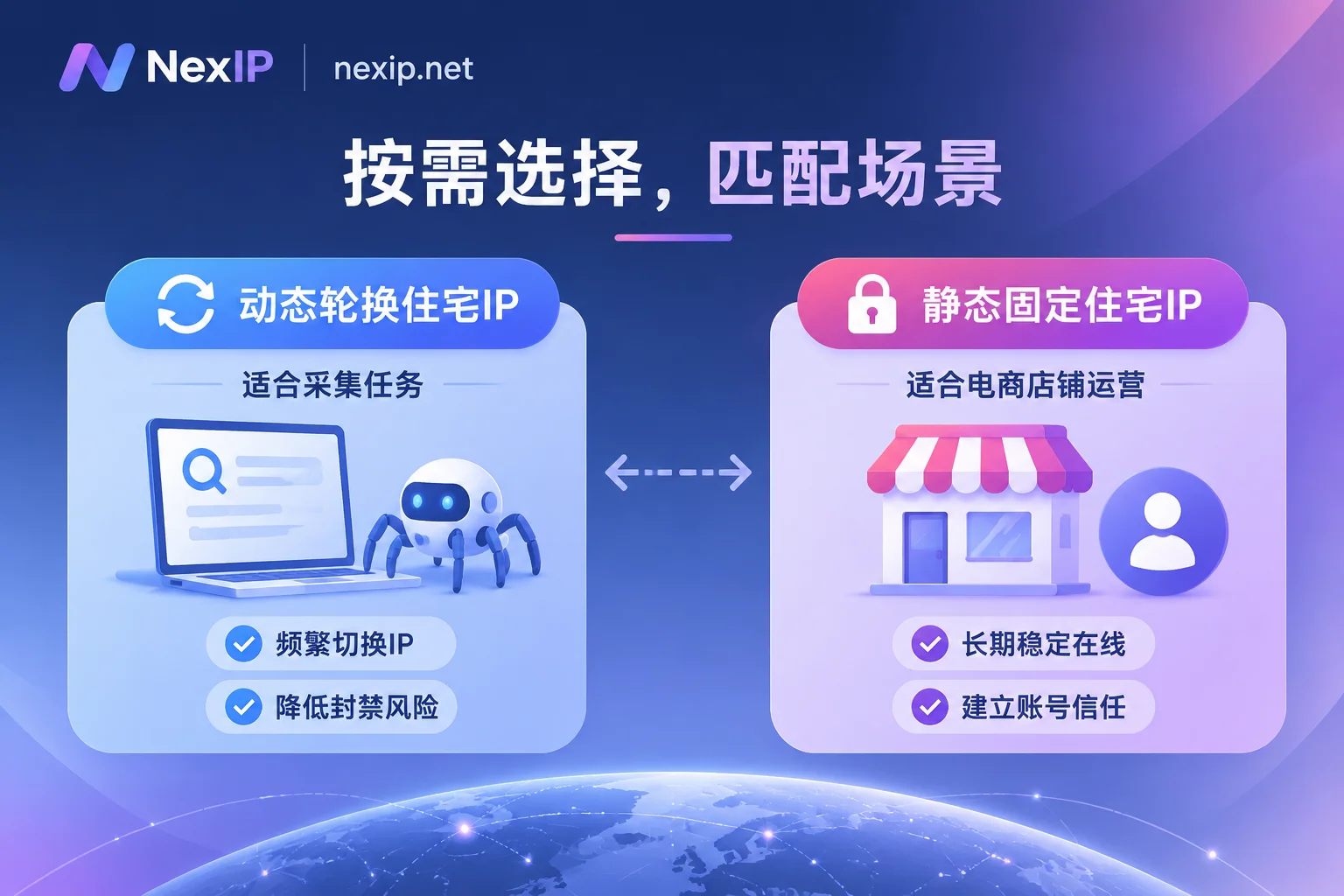
1. High-frequency Data Collection and SEO Monitoring
If you are doing price comparison collection or SEO monitoring, you need massive and non-repetitive exits. At this time, purity is reflected in "success rate" and "distribution breadth."
- Recommended solution: Dynamic Residential Proxy · Traffic Package. It is suitable for high-concurrency rotation, making the platform think you are real users scattered across the country.
2. Account Matrix and Cross-border E-commerce Operations
This is the field with the highest requirements for purity. Store management and TikTok operations—even a single risk control verification caused by exit drift can cause serious asset losses.
- Recommended solution: Static Residential Proxy · Long-lasting IP. What you need is an "exclusive" and "fixed" IP environment, just like buying a broadband cable locally. Especially for TK operations, a fixed exit is the foundation for maintaining account weight.
3. AI Agent and Data Training
When an AI model accesses web pages or calls APIs, if the exit frequently jumps, the data source will refuse service.
- Recommended solution: Choose according to business logic. Use dynamic traffic for AI data collection, and configure static long-lasting IPs for AI Agents that need to maintain login status for a long time.
3. How to Maintain Your Business Purity at NexIP?
In addition to choosing the right package, proper usage is also key:
- Avoid rotating too fast: When operating accounts, do not frequently switch between different countries; maintain session stickiness.
- Sub-account management: Use NexIP's sub-account feature to isolate different business lines and different stores in different proxy pools, preventing the spread of "dirty chains."
- Choose access as needed: Whether it's API extraction or process proxy, ensure your local environment has no DNS leaks—this is often the overlooked killer of purity.
Want to customize exit configurations based on your business? Check out our industry-wide scenario solutions, or directly visit the user backend for testing.
Related reading suggestions: