 NexIP官方博客
Imagine this scenario: ChatGPT detects hundreds of people using the same datacenter IP from Amazon Cloud. This clearly doesn't match normal user behavior because a single household cannot have that many people, nor do they live in a data center, so they are flagged.
Below, we'll start with some background knowledge. If you want to jump straight to the answer, feel free to skip to the end of the article.
What is a Residential IP?
An IP is the primary identifier for all internet users, including the geographic location of the IP, the company the IP range belongs to, and the type of IP. A residential IP is a type of IP identified as ISP. At the most basic level, whether an IP is residential is determined by the ASN (Autonomous System Number) of the IP range it belongs to, which is announced via BGP (Border Gateway Protocol).
For example: IP 120.229.50.100 → belongs to the 120.229.0.0/16 IP range → AS9808 is the autonomous system number responsible for broadcasting (according to BGP, this IP range is declared as belonging to China Mobile's ASN). Therefore, this IP is a residential IP.
Simply put, the company owning this IP and its range primarily provides broadband or mobile data for households, so the IP is classified as residential.
Difference Between Residential IP and Datacenter IP
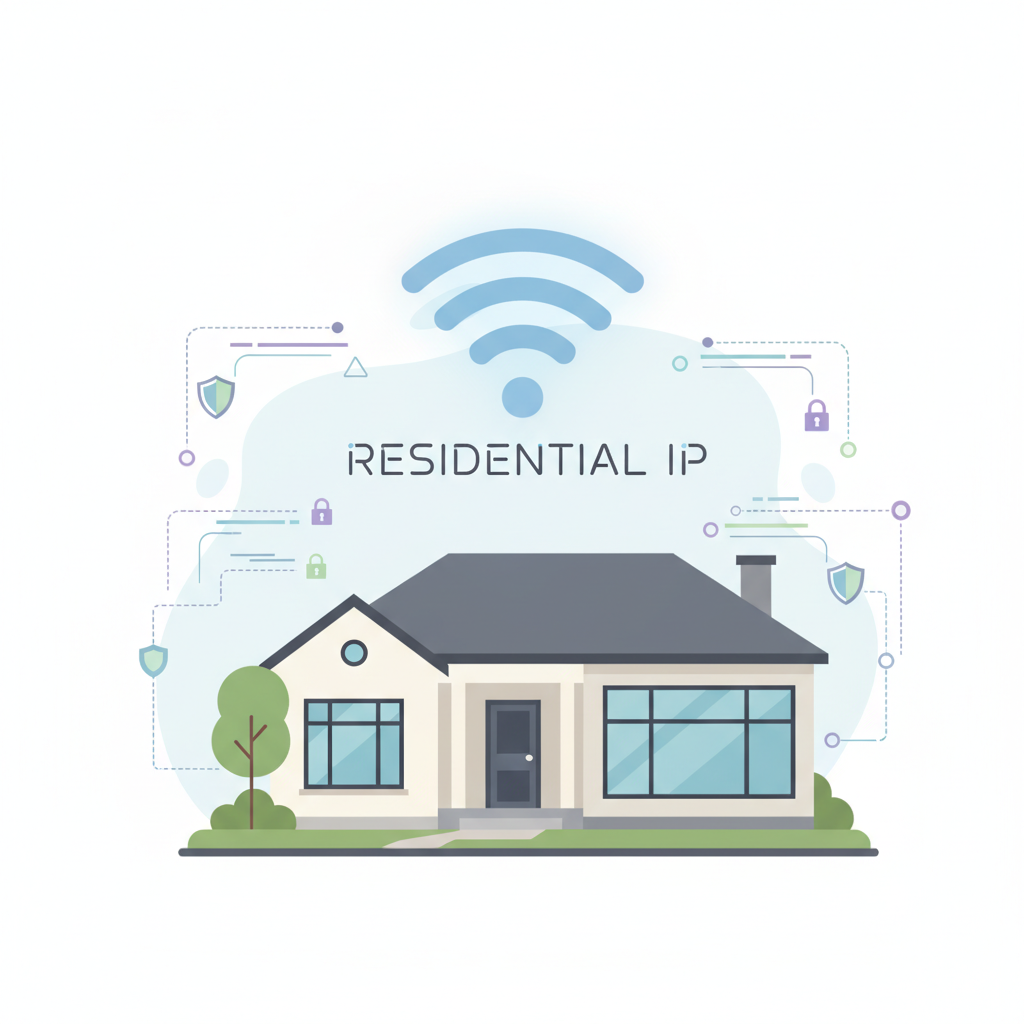
Residential IPs are assigned for ordinary household use, mainly for WiFi, like the IP of your home WiFi.
Datacenter IPs are allocated to data centers or some cloud services for servers, including crawlers and scraping tools. Most commonly, many VPN/airport/proxy services use these datacenter IPs on their servers, which are shared by thousands of users.
For example, if OpenAI detects hundreds of people using the same datacenter IP from Amazon Cloud to access ChatGPT, it clearly doesn't match normal user behavior, leading to flagging.
Uses of Residential IPs
Accessing foreign AI, including ChatGPT, Gemini, Claude, etc., to avoid ChatGPT intelligence downgrades, Gemini quota limits, Claude account bans, etc.
Reasons:
- Geopolitics: These foreign AI companies do not provide services in China, and some adopt extreme political stances toward domestic users.
- Tech embargo: Some Chinese companies distill these foreign models. To avoid being quickly caught up, they inject malicious erroneous data or replies into suspicious access.
- Cost saving: Some small domestic businesses share one ChatGPT Plus membership among dozens or hundreds of users, causing excessive quota consumption, inevitably leading to downgrades and bans. If you happen to share an airport IP with a high-frequency user, your account is likely to be affected.
- Registering accounts like Google, X, and nurturing them.
Using a residential IP can disguise you as a real local overseas user, avoiding being identified as a bot or crawler, thus reducing CAPTCHA prompts, activity restrictions, or forced phone/identity verification. - TikTok overseas live streaming, cross-border e-commerce.
Platforms have extremely high requirements for sellers' network environments. A clean residential IP provides a genuine local network environment, avoiding live stream throttling, store bans, or inability to attach shopping carts.
In short, we need to become a normal US WiFi user via a residential IP, and then nothing goes wrong.
How to Choose a Residential IP?
Notes:
Residential IPs currently come in several types. One type is not directly accessible and requires building complex chain configurations to connect (some providers don't explain how to configure, and it's uncertain if protocols are compatible with your airport).
Newer direct-connect residential IPs (lines are unstable, high latency, and some are overpriced).
The latest premium dedicated direct-connect residential IPs (use directly, low latency, high IP quality, balancing speed and security).
- Must be residential static (not mobile/datacenter)
How to judge? Use IPinfo.io for authoritative detection. Type should be ISP, not Hosting. - Purity: cross-verify with third-party sites.
For example, ping0.cc, ipdata.co. - Low latency
Chain proxies require multiple hops, and there may be line issues. Choose a residential IP with dedicated direct connections (no complex setup with ordinary airports). Via CN2 GIA connections, outbound traffic doesn't congest, with Tier1 priority across the ocean, ensuring no congestion or lag, reaching near physical limits. - Price
Ordinary airport prices: 20-30 RMB. Dedicated airport prices: 40-60 RMB. Residential IP single monthly: 2-3 USD (about 21 RMB). Higher quality: around 30-40 RMB. Therefore, a premium dedicated + exclusive residential IP should cost between 90-100 RMB. Above that, you're likely being scammed; below that, unless it's shared among 2-10 people, it's probably fake.
My Personal Experience with Residential IPs (Several tutorials published, all real tests)
First provider: a proxy I used before
I used this one half a year ago, pairing it with my airport node as the internet exit. But recently this static IP has become very unstable, and three months ago there was a DNS leak incident:
At that time, my US static IP was detected by Google. Opening Gemini directly showed "Region Not Available."
What Google saw:
Connection IP = US (your static IP)
But DNS queries came from China → obviously "not in the US," flagged as abnormal/proxy/region unsupported → directly showed "Region Not Available."
I had TUN and global mode on the whole time. I contacted customer support with screenshots and evidence to change the IP, but to no avail. The support staff even refused to acknowledge the DNS leak.
Now I've switched to another provider: NexIP
This one offers domestic dedicated direct-connect static residential IPs without chain configuration. My previous setup was airport + static IP manual configuration, which was cumbersome and cost over 100 RMB per month combined.
Then I researched and found NexIP's solution cheaper than my previous one, and no configuration needed. So I bought it and tried it out; it works well.
IP purity reference image: also ISP type.
Finally, Recommendations for IP Detection Websites
There is no absolute standard to judge residential IPs. Different sites have varying data, but we can make a comprehensive judgment based on multiple detection sites.
Among them, IPinfo is the most authoritative and is the IP information partner for OpenAI, Google, and Anthropic.
Ping0.cc is the most popular in China but is a bit too clever for its own good, with unnecessary extra judgments, many ads, and lack of neutrality.
Some domestic detection sites are completely fake; one site even demands protection money. It's recommended to mainly consult foreign ad-free detection sites. You can also refer to ipip0.net, which has accurate data with clear sources and does a great job.