 NexIP官方博客
In today's data-driven era, web crawlers have become a key tool for enterprises to gather information. But do you know why some crawlers can easily collect vast amounts of data while others often get blocked? The answer lies in large-scale residential proxy pools. Today, we'll explore this magical tool that makes data collection efficient and secure.
1. What is a Residential Proxy Pool?
Simply put, a residential proxy pool is a "resource library" composed of thousands of real home network IP addresses. Unlike traditional data center proxies, these IPs come from real home broadband users worldwide, acting like an "invisibility cloak" for your crawler.
Core features:
- Authenticity: Each IP corresponds to a real home network, making it hard for websites to identify as a crawler
- Diversity: Covers IP addresses from different regions and ISPs globally
- Stability: A large pool ensures that even if some IPs fail, the overall service remains unaffected
2. Why Do We Need Large-Scale Residential Proxy Pools?
1. Anti-bot Mechanisms Are Getting Smarter
Modern websites not only detect access frequency but also analyze IP "behavior patterns." If an IP accesses thousands of pages in a short time, or the access path deviates from human behavior patterns, it can easily be identified and blocked.
2. Growing Demand for Data Collection
Enterprise-level data collection projects often require:
- Monitoring multiple websites simultaneously
- Running 24/7 without interruption
- Collecting millions or even billions of data points
These demands impose high requirements on the scale and quality of the proxy pool.
3. Breaking Geographic Restrictions
Much valuable data is geographically restricted, such as:
- Price data from e-commerce platforms
- Local business information
- Regional news and public opinion
A large-scale residential proxy pool can provide IPs from different countries and regions, easily bypassing these restrictions.
3. Core Advantages of Large-Scale Residential Proxy Pools
1. High Anonymity and Stealth
Residential proxy pools use real home IPs, making crawler behavior closer to normal user visits.
High-anonymity proxy IPs carefully handle HTTP headers, deleting or modifying fields that might reveal the real identity (such as the "Via" field), preventing the target server from identifying the true source.
2. Strong Fault Tolerance
Imagine if your proxy pool has only 100 IPs and one gets blocked, your crawler efficiency drops by 1%. But if the pool has 1 million IPs, the failure of a single IP barely affects overall performance.
3. Intelligent Rotation Mechanism
High-quality proxy pool services typically include an intelligent rotation system:
- Automatically detect IP quality
- Dynamically assign optimal IPs
- Replace failed IPs in real time
This intelligent management allows crawler engineers to focus on data logic rather than IP maintenance.
4. Geographic Flexibility
Residential proxy pools usually cover multiple countries and regions globally, allowing crawlers to simulate users from different locations and access geographically restricted content. This is crucial for collecting information worldwide.
4. How to Choose the Right Proxy Pool Service?
Building an efficient large-scale residential proxy pool requires considering multiple factors:
1. IP Resource Quality
Prioritize residential IP resources with high purity and stability. Static residential proxies (also known as ISP IPs/native IPs) are residential in nature, expensive, scarce, but have high IP purity.
2. Rotation Strategy
Choose an IP rotation strategy based on the task type. For long-term continuous access tasks, static residential proxies are suitable; for tasks requiring frequent identity changes, dynamic residential proxies are better.
3. Performance Monitoring
Establish a comprehensive IP performance evaluation system to monitor response speed, success rate, and anonymity in real time, ensuring the overall health of the proxy pool.
4. Cost Control
Residential proxies are costly, so choose a plan based on actual needs. Some providers offer flexible plans, allowing users to purchase as needed.
5. NexIP: Dynamic Residential Proxy Pool Provider
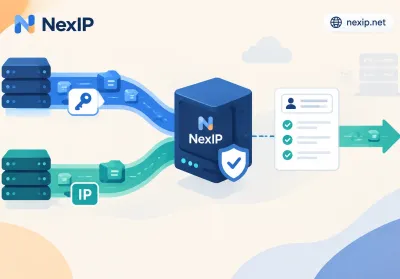
We recommend trying NexIP's dynamic residential proxy pool. It makes every request appear to come from real users around the world, easily bypassing various anti-bot mechanisms and geographic restrictions. Whether for data collection, ad verification, or price monitoring, NexIP provides stable, anonymous, and efficient network connections, greatly improving business success rates.
- Ultimate Anonymity, Hard to Trace: Uses high-anonymity proxy technology to completely hide your real IP, effectively avoiding detection and blocking by target servers.
- Massive Real Residential IPs, High Purity: The proxy pool consists of millions of real home IPs worldwide. These IPs are clean, unmarked, ensuring high availability and low blocking rates.
- Intelligent Dynamic IP Rotation, Bypass Restrictions: Supports automatic IP switching per request, with each new request possibly coming from a different geographic location. This dynamic feature is ideal for handling frequent access restrictions, high-anonymity ticket grabbing, and large-scale data scraping, perfectly solving IP blocking issues.
6. Conclusion
The core of data collection is not how flashy the technology is, but whether it can stably and continuously obtain valuable information. A high-quality residential proxy pool is the key guarantee for achieving this goal. In practice, adjust request frequency based on the target site's anti-bot strength, and use a combination of different IP types (residential proxies, data center proxies) to achieve optimal data collection results.