 NexIP官方博客
What is Dual-ISP Residential IP?
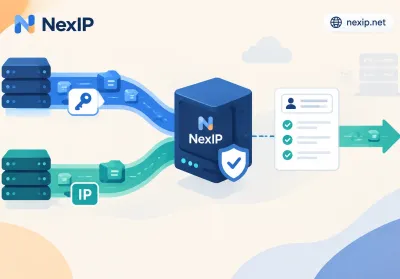
In scenarios such as overseas social media operations, cross-border e-commerce store management, and compliant overseas data collection, the stability of the network environment directly determines the security ceiling of the business. The so-called dual-ISP residential IP refers to network IP addresses allocated by genuine local telecom and broadband operators (such as AT&T, Verizon, Comcast, etc.), where in the network Autonomous System Number (ASN) and Whois database, both the access line and the IP ownership subject show as a real residential ISP.
Compared to common datacenter IPs (Hosting) or single-ISP proxies subleased by cloud service providers, dual-ISP residential IPs exhibit extremely high "real home user" credibility in platform risk control systems, making them less likely to be flagged as proxies or hosting nodes by target platforms.
Platform Risk Control Upgrade: How IP Fraud Detection Evolves
According to the proxy detection and IP reputation report released by IPinfo, network security and risk control teams are shifting detection focus from traditional static blacklists to cross-validation of data based on dimensions such as ASN attributes, geolocation stability, and last_seen. Meanwhile, IP2Location clearly classifies IP types (proxy_type) into datacenter (DCH) and residential (RES) in its Fraud Score model.
Under this risk control logic, traditional datacenters and shared proxies face serious challenges:
- Bulk blocking of datacenter IPs: Datacenter ASN ranges such as AWS and DigitalOcean are defaulted to high-risk lists when accessing highly sensitive platforms.
- Single-ISP / cloud-hosted pseudo-residential identification: Some proxy providers use datacenter servers to broadcast residential IPs. Although their Whois claims ISP, the backbone nodes still expose datacenter characteristics, easily triggering "frequent remote changes" anti-association alerts.
- Upgraded high-reputation scenarios: High-value cross-border account registration, long-term account nurturing, and live streaming require network nodes with high consistency and long-term online capability.
Proxy Type Reputation Comparison
| Attribute Dimension | Datacenter IP (DCH) | Single-ISP / Mixed Residential IP | Dual-ISP Static Residential IP |
|---|---|---|---|
| Whois Attribution | Datacenter / Cloud Service Provider | Operator / Cloud Vendor Mixed | Real Residential Broadband Operator |
| ASN Label | Hosting / Datacenter | Mixed Label | Pure Residential ISP |
| Risk Control Score | Very High (easily triggers verification) | Medium (occasional rate limiting) | Very Low (identified as real broadband) |
| Suitable Scenarios | Large-scale basic crawling | Temporary data query | Account nurturing, store operation, cross-border live streaming |
How NexIP Empowers Enterprises to Build a High-Purity Network Environment
Facing the intelligent upgrade of risk control systems, relying solely on random proxies can no longer ensure business stability. NexIP focuses on providing high-performance proxy network solutions for cross-border enterprises and professional teams, covering dynamic residential proxy traffic plans, dynamic residential proxy bandwidth plans, static short-term residential IPs, and static long-term residential IPs.
In dual-ISP residential IP and anti-association architecture configuration, NexIP offers flexible and professional selection solutions:
- Precise geotargeting and session control: Through NexIP's global region selection and city/ASN targeting capabilities, operations teams can lock network nodes within designated residential ISP ranges, simulating real home environments.
- Fixed identity and session persistence: For cross-border e-commerce store operations and high-frequency social media interactions, combining static long-term residential IPs with HTTP/SOCKS5 protocol access ensures consistent IP throughout the operational chain, eliminating identity drift risks.
- Automated API integration: NexIP provides convenient API integration interfaces, allowing enterprise teams to seamlessly connect proxy scheduling systems into fingerprint browsers or anti-association automation workflows, improving management efficiency.
Practical Troubleshooting and Proxy Compliance Configuration Guide
To verify the actual purity and fraud risk of the current network node, follow the standard checklist below:
1. IP Attribute and ASN Detection
Use professional network tools to query the ASN type of the IP. Focus on checking whether Usage Type is Fixed Line ISP or Broadband, ensuring it does not carry the Data Center/Web Hosting label.
2. Fraud Score Evaluation
Test the risk value of the IP through reputation detection platforms. The ideal dual-ISP native residential IP should have a fraud score in the low-risk range (0-15) and not be listed on Spam or Botnet blacklists.
3. Fingerprint Browser and Protocol Adaptation
When configuring fingerprint browsers or enterprise proxy relays, it is recommended to choose SOCKS5 protocol for more stable long-connection support. Using NexIP's static residential IPs can effectively isolate network environments between different accounts, ensuring operational isolation.
Brand Interaction and Selection Suggestions
To help enterprises build a highly reliable network architecture under the backdrop of upgrading risk control, the platform suggests that teams regularly evaluate the real IP requirements of their business scenarios: use dynamic traffic plans during data collection, and choose static long-term residential IPs for core asset operations. Welcome to the platform's official website (https://nexip.net)了解更多关于全球住宅 for compliant solutions for IP targeting and static network configuration, laying a stable network foundation for your overseas business.



Comments(0)