 NexIP官方博客
In 2026, the logic for enterprises using overseas proxy IPs is undergoing a major shift. The past practice of simply switching IP addresses to pass platform verification is no longer effective. With major global e-commerce platforms, overseas social media, and advertising systems widely adopting AI-driven real-time IP intelligence and risk scoring systems, the "cleanliness" and "identity authenticity" of network connections have become key determinants of business stability.
Facing increasingly stringent risk control environments, how should enterprise teams scientifically evaluate the reputation of overseas proxy IPs? What business scenarios are dynamic residential proxies and static residential IPs suitable for respectively? This article combines recent industry risk control trends to provide a practical guide for compliant selection and network configuration.
2026 Overseas Proxy IP Industry Trends: Real-Time IP Intelligence and Reputation Scoring Mechanisms
In recent years, due to the abuse of residential IPs by some contaminated or unauthorized cybercrime networks, global cybersecurity agencies and hardware vendors have accelerated the cleanup of low-quality proxy networks. For example, in July 2026, LG announced a cleanup of its Smart TV platform, removing unauthorized residential proxy SDK modules. Meanwhile, an analysis report released by Lumen's Black Lotus Labs on July 24, 2026, revealed that botnets built by cybercriminals abusing residential networks have become extremely large, forcing major platforms to shift their defense focus from simple IP blacklists to more complex real-time IP intelligence.
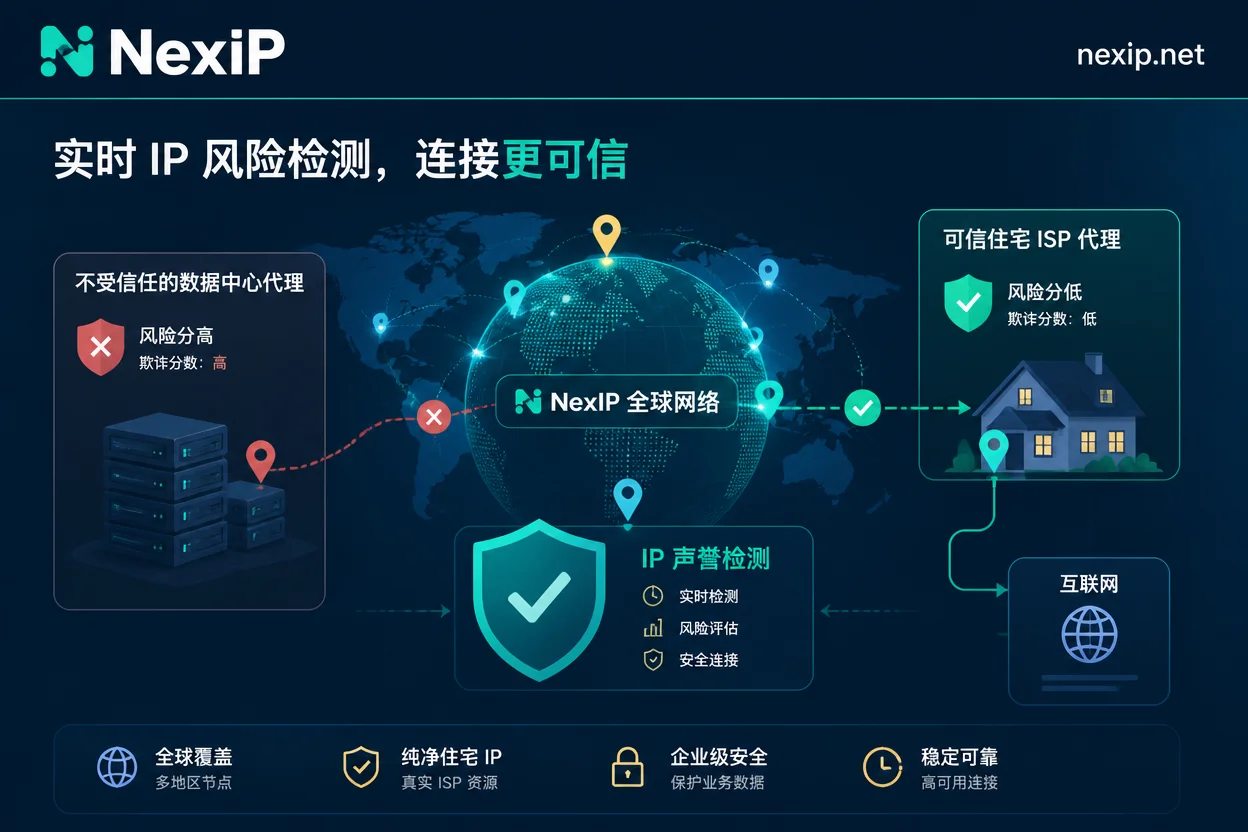
According to the 2026 IP Intelligence research data released by Spur Intelligence on July 28, 2026, 94% of surveyed enterprises identified signs of anonymous VPNs or residential proxies in security incidents, and nearly half plan to upgrade or deploy commercial-grade IP intelligence tools within the next 12 months. This means that when target platforms receive access requests, they will evaluate the following dimensions in milliseconds:
- ASN Attributes and Network Type: Identify whether the IP belongs to a data center, consumer ISP, or mobile operator.
- Historical Abuse Records and Noise Level: Check if the IP or the same CIDR range has a history of frequent collisions or cybercrime reports.
- Geographic and Fingerprint Consistency: Verify whether the IP's location matches the request packet's time zone, language, and HTTP/2/TLS fingerprint.
For compliant cross-border teams, using a contaminated shared pool is likely to be directly classified as high-risk traffic by risk control systems, leading to account restrictions, live stream lag, or data collection failures.
Dynamic vs. Static Residential IPs: Scenario Matching and Selection Recommendations
To ensure the stability of overseas business, the first step is to match the correct IP type based on business characteristics, avoiding "high risk control due to wrong scenarios."
1. Static Residential IPs (Static Short-term and Long-term / Dual ISP)
- Core Advantages: Assigned by real telecom operators (ISPs), these have fixed IP addresses and high natural reputation, offering stable network connections and less likely to trigger CAPTCHAs.
- Applicable Scenarios: Overseas social media operations (TikTok, Instagram, Facebook), multi-store management for cross-border e-commerce, cross-border live streaming dedicated lines, and daily maintenance of sensitive accounts.
- Selection Points: Must have excellent session stickiness to ensure the IP does not disconnect or drift frequently during operations.
2. Dynamic Residential Proxies (Traffic-based or Bandwidth-based)
- Core Advantages: Possess a vast pool of real residential IP nodes, supporting automatic rotation per request or set time, covering multiple countries and cities globally.
- Applicable Scenarios: Public market data collection, price monitoring, ad effectiveness verification, SEO ranking tracking, and global functional testing.
- Selection Points: Pay attention to the purity of the IP pool, global regional selection flexibility, and city/ASN targeting capabilities.
NexIP Network Architecture Practice: Building Stable and Clean Overseas Network Channels
In a harsh risk control environment, when choosing a proxy service provider, enterprises should focus not only on price but also on the compliance of the network source and the stability of the infrastructure. As a professional network proxy solution provider, NexIP has built a comprehensive product matrix for different business needs:
- Dynamic Residential Proxy: Offers dynamic residential proxy traffic plans and dynamic residential proxy bandwidth plans, supporting global regional selection and precise city/ASN targeting, with flexible API integration to meet high-concurrency collection and compliant data access needs.
- Static Residential Proxy: Includes static short-term residential IPs and static long-term residential IPs, designed for scenarios requiring long-term identity consistency, ensuring high session stickiness and connection stability, fully supporting HTTP/SOCKS5 protocols.
By combining high-quality native residential resources with precise session control, NexIP helps cross-border teams effectively avoid risks from low-quality IP pools, ensuring smooth network operations.
Enterprise Overseas Proxy IP Configuration and Purity Testing Checklist
When deploying a network environment, it is recommended that teams establish the following standardized inspection process:
- [ ] IP Reputation and Purity Spot Check: Before use, check the IP's Fraud Score and blacklist records through third-party databases to ensure the IP has no history of abuse.
- [ ] Match Business Session Strategy: Account management must use static long-term IPs with fixed sessions; data collection tasks should set reasonable rotation frequency and request intervals.
- [ ] Network Protocol and Client Adaptation: Confirm that the proxy tool is correctly configured with HTTP or SOCKS5 protocols to avoid DNS or IPv6 leaks.
- [ ] Geographic and Fingerprint Synchronization: Ensure that the proxy IP's geographic location (country/city) completely matches the browser environment settings (language, time zone, System Location).
As risk control rules continue to upgrade, clean and compliant residential IPs are the foundation for stable overseas business operations. It is recommended that teams regularly evaluate their existing network proxy infrastructure and reasonably choose dynamic or static resources based on business scenarios to ensure the stable growth of overseas business.



Comments(0)