 NexIP官方博客
For multi-account operations on short video platforms, IP is the identity threshold. Once you have many accounts, sharing a network immediately triggers platform association, leading to shadow bans or follower loss. In recent frontline operations, many still start with VPNs and quickly fall into pitfalls. What really holds up is residential proxy IPs, especially those from genuine home broadband sources.
First, distinguish the types. Datacenter IPs are cheap and fast, but platforms recognize their data center characteristics and blacklist accounts at creation or login. Mobile proxies (4G/5G operator IPs) have the highest trust because real users share the same IP segment heavily, making it hard for platforms to flag. Residential proxy IPs are the cost-effective choice: addresses assigned by ISPs to real home devices, making a user appear as an ordinary person browsing on their phone at home. Static/ISP residential is suitable for long-term fixed identity, while rotating ones are used for distributing requests. In production, a common combination is sticky sessions maintaining the same IP for 10-30 minutes or longer for login and multi-step operations, and rotating IPs for scraping or bulk actions.
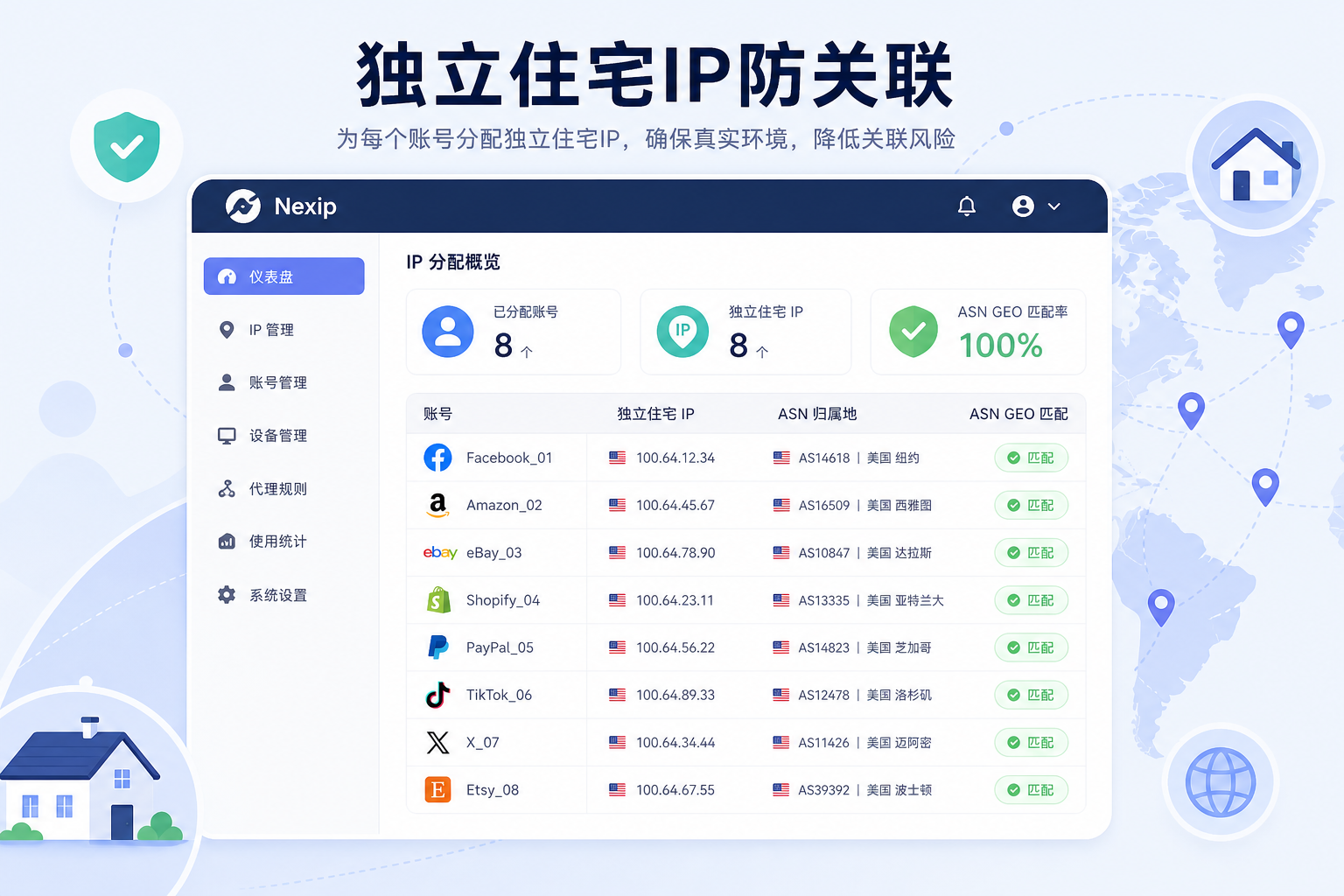
The core configuration rule is: one account, one IP, and sticky. Platforms like Instagram treat IP as an identity marker; multiple accounts sharing one IP will be linked within hours. TikTok is the same: login logs record IPs, and frequent switching triggers association. In practice, assign each account an independent residential IP, matching the country/city to the account's claimed location, and keep the session fixed. During the farming phase, do not change IP midway: once the IP changes while the app is open, it’s easy to get flagged.
Farming details are essential. Prepare a clean device or anti-detection environment, paired with a residential IP of the target country. Create a new Google account, then register TikTok or Instagram. For the first three days, only browse: no posting, no aggressive liking, no mechanical scrolling. Start commenting from day three, with natural content. Act like a real person: dwell time varies, interactions are spaced. There’s a case of someone running a US TikTok account from the Netherlands using a US residential IP, with a cheap Android phone + fixed residential IP + natural warm-up for a week before switching to automation, resulting in single posts easily breaking 1000 plays. The key is that ASN and GEO must match. ASN is the “passport” (whose network), GEO is the “face” (where the platform thinks you are). If they don’t match, even the best IP is useless. Don’t blindly trust IP quality scoring tools used for payment risk control; they have almost zero correlation with short video platforms in real tests.
When choosing in practice, note these points: The pool should be large, covering many countries and cities, supporting city-level geolocation. Session control should be flexible, allowing sticky duration settings and on-demand rotation. Sources must be transparent and compliant to avoid black-market device pools. Request rhythm should mimic human behavior: interval of 2-5 seconds or more, random delays, no instant bursts. User-agent strings should be from recent mainstream browsers or apps, matching the proxy’s geographic location. Error handling should include exponential backoff, distinguishing temporary bans from permanent issues. Monitor success rate, latency, ban rate, and cost per successful request, not just price per GB.
Common pitfalls abound. First, being cheap leads to unlimited traffic or ultra-low-cost pools, resulting in dirty IPs, low concurrency, and blacklists everywhere. Second, changing IP midway or sharing IPs triggers a chain reaction among accounts. Third, changing only the IP but not the fingerprint: device parameters are identical, so the platform still recognizes them. Fourth, skipping warm-up and jumping straight to automation, creating too uniform behavior patterns. Fifth, mismatching geolocation: a US account with an Asian IP leads to abnormal content distribution immediately.
Now for multi-account operations, compliant residential proxies are the foundation. Services like Nexip offer real residential IP pools, flexible session management, and geolocation, covering needs from farming to daily operations. When configuring, bind each account’s IP, fingerprint, and behavior into an independent identity, then overlay trending content for much higher stability.

Specific implementation steps can be as follows: First, clarify the target platform and number of accounts, calculate concurrency and bandwidth. Choose residential proxies, prioritizing those supporting sticky sessions and city-level geolocation. In anti-detection browsers or cloud phones, one profile corresponds to one IP. Verify the IP’s ASN and actual exit location. During the warm-up period, strictly perform natural operations and record daily behavior. Once stable, introduce scheduling tools while maintaining request rhythm. Regularly sample IP health and promptly remove bad ones.
As scale grows, mix and match: use static residential for core accounts to maintain long-term trust, and rotating for test accounts to spread risk. Optimize costs by reducing invalid retries, intelligent load balancing, and on-demand scaling. Platform rules are always changing; regularly review success rates and ban reasons—more important than fixating on a single IP type.
Residential proxy IPs are not a silver bullet, but they handle identity isolation most cleanly. To keep short video multi-accounts running long, start solidly with clean IPs and natural behavior. Nexip’s residential proxy capabilities help you quickly build this foundation, then focus on content and distribution. During operation, test more, record more, and adjust more—success rates will steadily increase.


Comments(0)