 NexIP官方博客
Anyone conducting market research recently can't avoid one issue: target websites’ anti-scraping is getting smarter, AI behavior analysis blocks datacenter IPs, and to get localized pricing, competitor pages, user-visible ads, or SERP results, you need residential proxy IPs. But residential IPs aren't just any pool you can buy. In the past two weeks, industry discussions about sourcing ethics have heated up, with cases emerging of fake installer packages turning user devices into nodes and malicious SDKs silently routing traffic. Choosing wrong not only hurts success rates but also puts compliance risks on your own shoulders.
Residential proxies essentially use real home broadband as exit points. Target sites see ordinary home connections, trust is higher, and bypassing strict anti-bot measures is much more likely. Market research particularly relies on this: global price discrimination monitoring, localized ad verification, competitor multi-step checkout flow reproduction, regional sentiment crawling—all need a perspective that looks like a real person browsing at home. Datacenter IPs are cheap and fast, but when facing serious defense from ecommerce or content sites, they get banned quickly. Industry consensus is straightforward: if the target doesn't fight back, use datacenter; if it fights back hard, go residential. Many teams initially save money with datacenter, get all banned within two days, then backtrack to residential pools, wasting time.
The problem lies in the label "residential" itself. It's just an abstraction. The underlying source is either user-consented, compensated, and opt-out-able participation, or devices forced in by malware or hidden SDKs. Fake 7-Zip installers, imitation VPNs, expired domain drop-catches, even seemingly legitimate apps can turn home PCs or Android devices into exit nodes and package them for proxy buyers. Victims may have no idea their bandwidth is being siphoned, and other devices in the home may be exposed to lateral risk. White-label resale makes tracing harder: the frontend looks clean, but the backend may mix in infected nodes. Once you use such pools, your scraping traffic indirectly rides on involuntary connections. Legal and procurement reviews increasingly scrutinize the supply chain, and plaintiffs have started including infrastructure providers in lawsuits. Ridiculously cheap "unlimited residential" is often a red flag—clean sourcing requires user compensation, SDK operation, compliance work, and that cost is real.
How is ethical sourcing defined? Core is informed consent plus fair compensation. Users join through explicit opt-in: reward-based SDKs (unlock features or remove ads), paid bandwidth-sharing apps, free services in exchange for bandwidth, or legitimate ISP/developer partnerships. They know they're contributing idle bandwidth, can opt out anytime, and privacy policies are clear. Ethical pools generally offer higher quality: participants are more stable, IP histories are cleaner, abuse rates are low, resulting in fewer CAPTCHAs and higher success rates. Conversely, malicious pools have volatile IPs, already flagged, and though seemingly large, high ban rates in use. Verification is straightforward: ask suppliers how they acquire residential IPs, demand specifics on SDK names, consent flow, opt-out mechanisms; check privacy policies, acceptable use policies, GDPR alignment; look for publicly available paid sharing apps or partnership traces; avoid "proprietary undisclosed" and free lists. Independent benchmarks and ethical framework documents can also help.
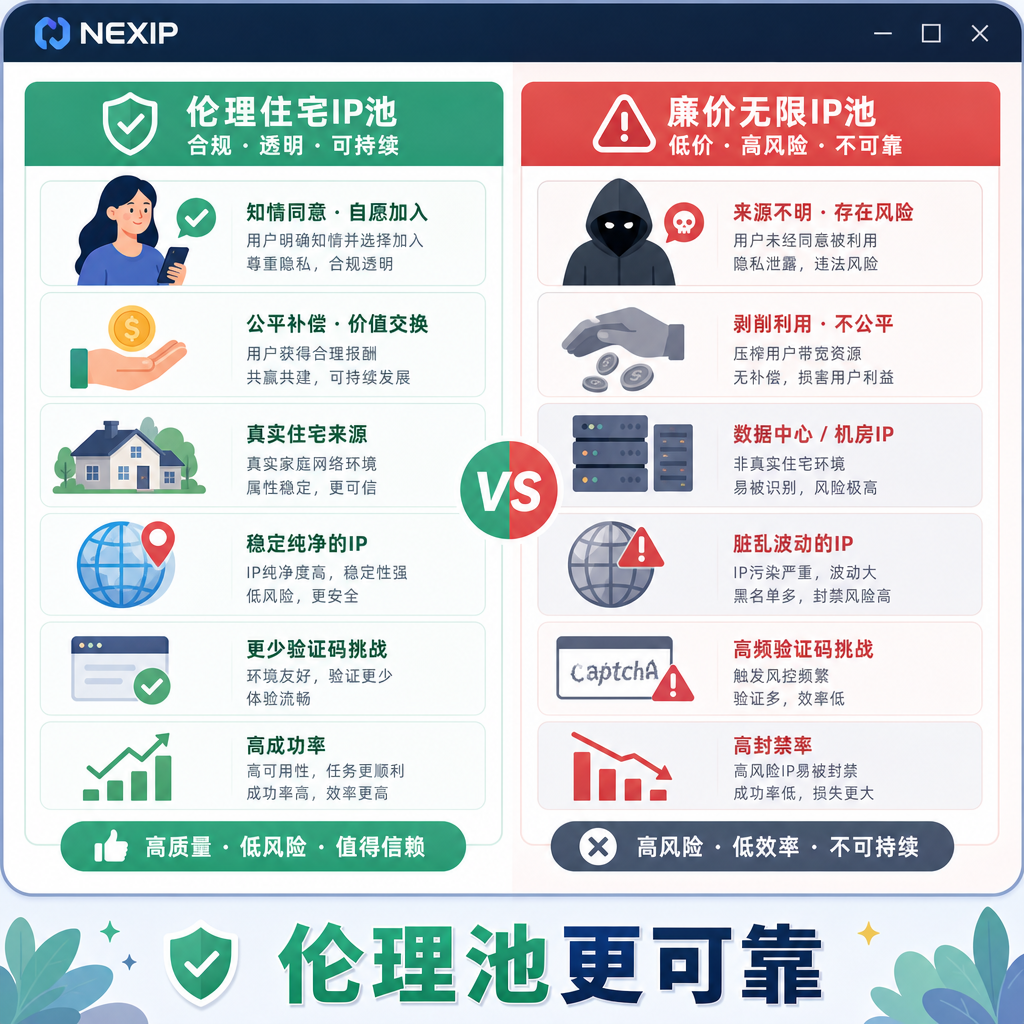
For market research teams, selection is just half the battle; proper usage matters too. First, consider pool size and geographic coverage. Millions of active IPs with country/city/ASN granularity support true localized insights. A global retailer shows different prices, inventory, and ad placements in different cities; broad country-level rotation won't capture real views. Session control is key. Simple list scraping uses high-frequency rotation, new IP per request; login, multi-page checkout, account-related flows need sticky sessions, keeping the same IP for a duration. Actual tests show huge variation in stickiness survival rates across suppliers, some above 80%, some near 99%; session mid-cycle rotation rates range from 1% to 6%. In login scenarios, this difference directly determines if you can complete the flow. Don't assume identical label equals identical behavior; test stickiness stability with real targets before going live.
Bandwidth optimization saves money. Market research rarely needs full page rendering. Disable images, CSS, fonts, pull only text and key metadata, reducing traffic by more than half. Cache already grabbed IDs to avoid duplicate requests. Add random delays and jitter to mimic human rhythm. Don't max out concurrency initially; first validate success rates at small scale then ramp up. HTTP/S protocol suffices for most web scraping; use SOCKS5 only for complex flows. When using headless browsers, ensure fingerprint consistency: if IP changes, UA, Canvas, WebGL must match, or behavior analysis catches you.
Common mistakes include: (1) Focusing only on price and claimed pool size, ignoring sourcing documentation. Too cheap with unclear consent means compliance issues later. (2) Using a one-size-fits-all session strategy. Full rotation on login flows messes up cookies and states; full stickiness on large list scrapes gets IPs flagged. (3) Indiscriminate geographic targeting. Enabling unnecessary regions wastes money and increases honeypot encounters. (4) Ignoring target robots.txt and politeness rates. Ethics isn't just about IP source; it's also about not overloading servers. (5) Neglecting downstream responsibility. If your supplier has weak KYC, your account may be used for malicious activities, hurting your own IP reputation.
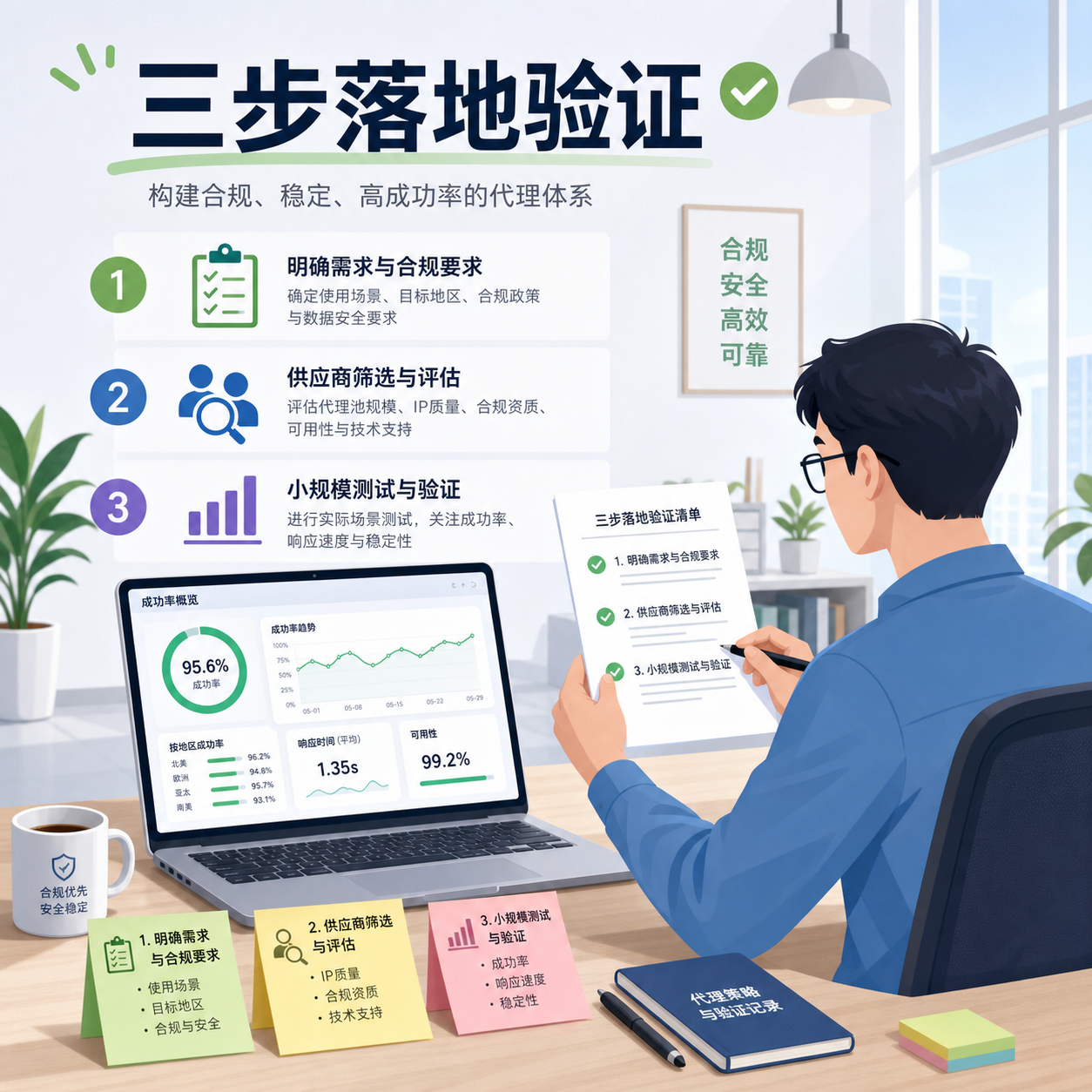
Implementation can follow three steps. Step one: list requirements—target site defense strength, needed geographic precision, multi-step requirements, daily traffic estimate. Step two: screen suppliers—prioritize those that clearly demonstrate consent models and audit trails, support flexible switching between sticky and rotational sessions, no monthly lock-in or pay-as-you-go, with real-time usage and success rate dashboards. Services like Nexip focus on compliant residential pools, providing dynamic rotation and sticky session capabilities, suitable for market research scenarios without needing to piece together multiple tools. Step three: run small-scale validation—pick core targets, test sticky login flows and rotational list flows, record success rate, latency, CAPTCHA frequency, IP dropout rate during sessions. Only scale up after passing. Also, maintain ability to switch suppliers, avoid lock-in.
In 2026, market intelligence cannot do without residential perspectives, but sustainability requires clean sources. Malicious nodes may seem cheap short-term, but long-term ban rates, legal risks, and brand exposure costs far exceed savings. Ethical pools, though not zero-cost, offer higher stability and defensible supply chains. When configuring, tackle session strategy, geographic precision, and traffic optimization together for steadier success rates. When choosing, ask "Do these IPs' users really know?"—that's more useful than staring at GB unit price. Nail these steps, and your data pipeline runs long while you sleep soundly.


Comments(0)