 NexIP官方博客
Many people initially choose cheap data center proxies for their business because they are fast and high-volume, but soon after, they frequently trigger CAPTCHAs or get outright banned. Switching to residential proxy IPs often immediately improves the situation. The reason is straightforward: residential IPs come from real home broadband connections, so websites see regular user traffic, naturally higher trust, making them harder to distinguish.
This trend is even more evident in 2026. Anti-scraping and risk control systems are becoming smarter, quickly identifying data center IP ranges. Residential proxies have become the default choice for most data collection, account management, and local content access. Although they seem more expensive on a per-traffic basis, the higher success rate and fewer retries make the actual total cost lower. Freelancers also find them particularly suitable for accessing platforms and handling remote tasks due to wide geographical coverage and behavior that resembles real users.
First, clarify the types to avoid picking the wrong one. Data center proxies are fast, cheap, and easy to buy in bulk, but they offer poor anonymity and are easily blocked. ISP proxies fall in between—better performance and legitimacy than pure data center, but still more likely to be detected than real residential on strict sites. Residential proxies directly use real home IPs: high trust, hard to distinguish, widespread coverage, ideal for scenarios requiring "normal people" behavior. Further breakdown: rotating residential proxies change per request or at fixed intervals, suitable for bulk one-time checks, but long sessions may break or trigger extra security checks. Static residential proxies keep the same address for a longer time, offering stability for persistent logins, shopping carts, or continuous operations, though they are more expensive and have limited availability. Quality entirely depends on the provider—clean pools and transparent sources are key.
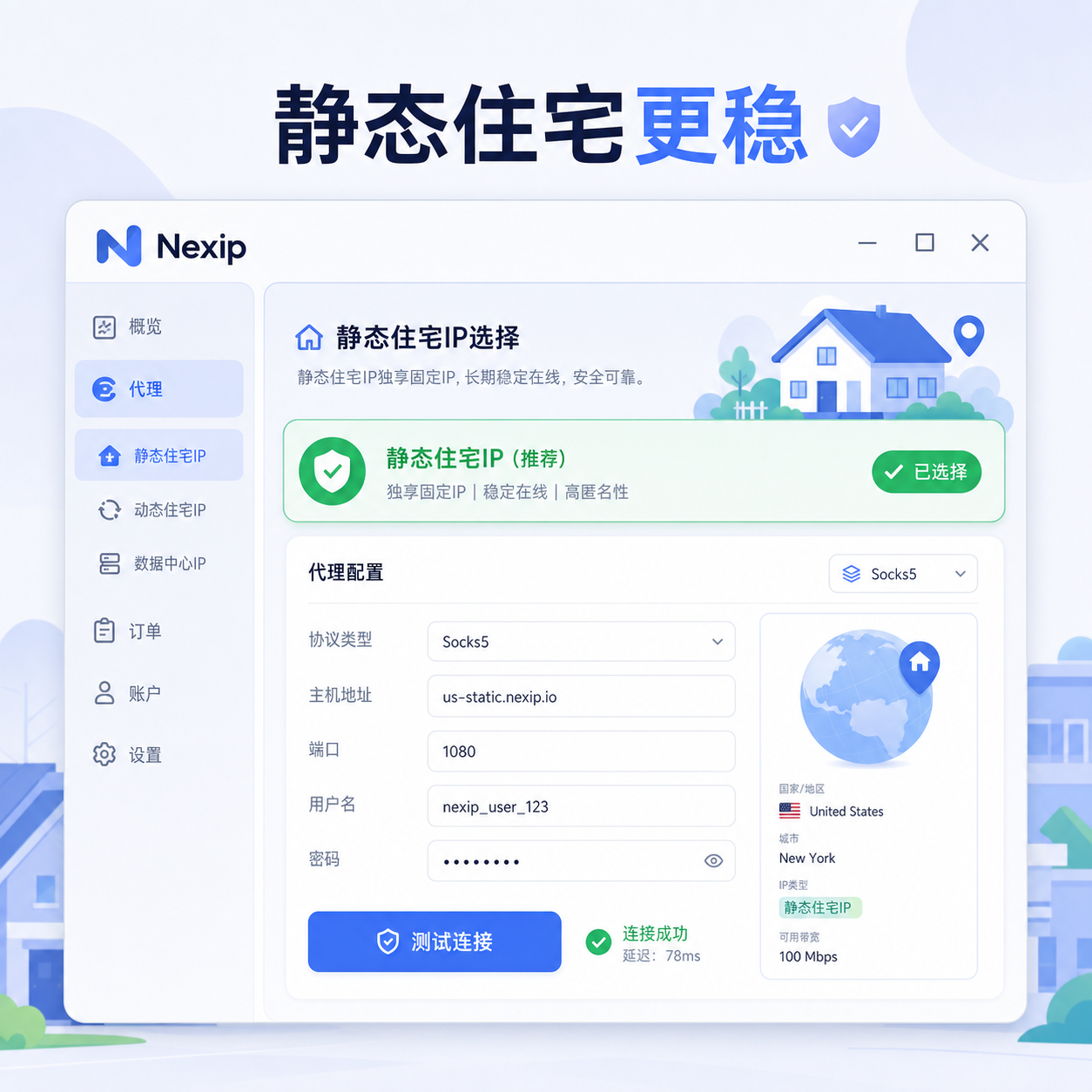
Common issues during actual configuration are numerous. Some people buy a residential IP and plug it directly into their software, only to find it won't connect. Certain network environments cannot reach overseas Socks5. In such cases, chain proxies come in handy: first go through a usable base node, then hop to the target static residential IP. The steps are simple: first ensure basic overseas connectivity is stable, then overlay the business IP. Prefer Socks5 during configuration, fill in the IP, port, username, and password, then test. After passing the test, don't rush to start; open the environment and double-check: whether the IP's country and city match, ISP and ASN are correct, DNS environment, browser timezone and language, and whether it shows Hosting. The more consistent the network, device, and browser parameters, the more stable in the long run. Don't rely on a single detection site; use several cross-checks, verifying city-level positioning and ASN info.
How to use in business scenarios? For freelancers or multi-platform operations, static residential proxies are better for nurturing persistent sessions to avoid login anomalies from frequent IP changes. For price monitoring or local content viewing, rotating with city-level targeting is sufficient and offers broader coverage. Don't switch too fast during login flows; keep the same IP throughout authentication and browsing until risk signals appear before rotating. Avoid excessive concurrency, as too many parallel requests can increase bans and waste traffic. Measure success rates and connection success rates (CPSR); keep block rates on public pages low, while slightly higher rates on login flows are acceptable. For geographic accuracy, don't rely solely on IP databases; cross-check with on-page local hints and store locators. Bandwidth control is also crucial: compress, cache static content, and rotate based on results rather than blindly per request.
Focus on a few things when selecting. Success rate and block rate are hard metrics: run the same target page at the same time period and calculate the true return ratio. Speed: look at time to first byte and full load time, run multiple times to smooth out fluctuations. Geography depth: from country to city even ASN, especially important for local inventory or promotion scenarios. Session control should be flexible, supporting both stickiness and rotation. Pool hygiene: check if the source is opt-in and refreshed regularly. Tools and documentation completeness, plus responsive support, make onboarding easier. Services like Nexip offer multi-location coverage and stable session support for residential proxy IPs, suitable for high-trust daily business switching.
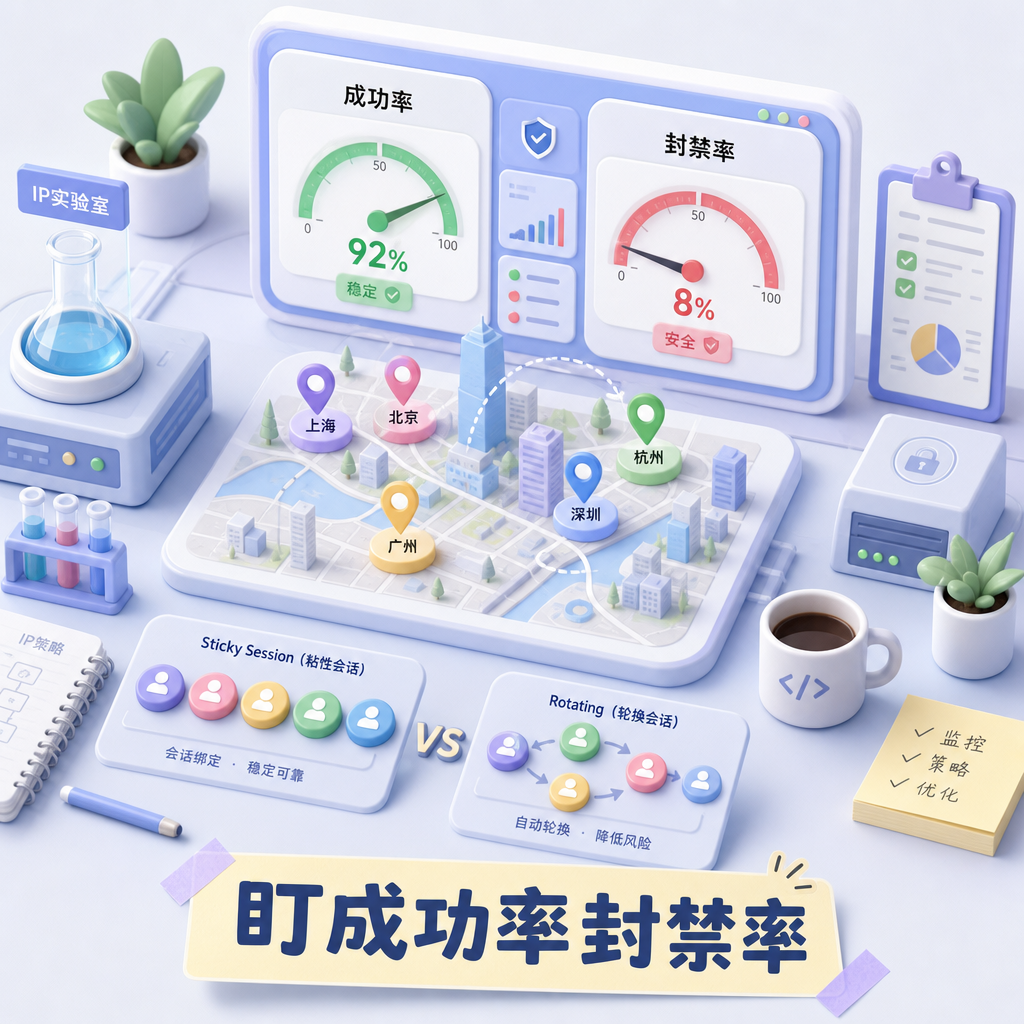
Common misconceptions include: thinking fast is good, only to find data center proxies fail in business scenarios after accumulated usage history; testing only connectivity but not consistency, leading to parameter conflicts later causing instability; blindly using residential proxies everywhere, while public high-volume tasks are actually more cost-effective with data center proxies—mixing both is efficient. Login loops, geographic mismatches, ASN hotspots, and automation without real behavior are typical failure points in 2026. Start with a small pilot for two weeks, monitor block rates, CPSR, and unit success cost, then scale up.
In practice, first determine if the task requires long sessions or high-volume rotation, then match the type. After configuration, align with multiple detection checks; chain proxies solve connectivity issues, parameter consistency ensures stability. Nexip provides reliable basic capabilities in residential proxy IP scenarios, helping you avoid many pitfalls of network and environment mismatches. Choosing residential IPs with high trust significantly improves business smoothness. Adjust according to these key points: success rates increase, waste decreases, and long-term usage becomes more efficient.


Comments(0)