 NexIP官方博客
Anyone in SEO knows ranking monitoring isn't just "search once and done." The same keyword can show vastly different results depending on city, device, and time. Using your office IP gives you a personalized version that doesn't reflect what real users in your target market see. As scale grows and requests increase, search engines tighten anti-scraping: CAPTCHAs, empty results, temporary bans — data goes straight down the drain.
That's when dynamic residential IPs become essential. They come from real home broadband, making requests appear like ordinary users browsing the web, much harder to flag than datacenter IPs. Combined with rotation mechanisms, requests are spread across a large pool, keeping success rates high. Many teams now use this as daily infrastructure, not a temporary patch.
Why residential specifically? Datacenter IPs are fast and cheap, suitable for low-frequency technical audits or less protected engines like Bing. But Google is increasingly sensitive to datacenter blocks. For local intent, map results, and featured snippets — content heavily dependent on geographic location — residential IPs give you something close to reality. Dynamic residential IPs continuously change addresses, preventing a single IP from accumulating too much history and getting flagged. Static residential is better for scenarios needing a consistent identity over time, but for broad keyword sweeps, dynamic rotation is more appropriate.
In practice, rotation strategy is the first defense. Common production approaches: use short-life rotation for broad keyword collection, changing IP every few requests or every 10-30 minutes to spread load. For consecutive pagination, comparing results within the same session, or maintaining cookie state, switch to sticky sessions. Too sticky triggers rate limiting; too short breaks data consistency. The balance depends on the target engine's sensitivity and your request volume.
Request pacing must mimic human behavior. Don't blast at fixed intervals. Add random delays of 2-5 seconds or even 3-15 seconds. Keep single IP requests under 10-15 per minute. Rotate user agents, but not on every request — keep consistent within a session, matching common browsers for the geographic location. Include sensible accept-language and referer headers, and manage cookies properly. These details combined prevent pattern detection.
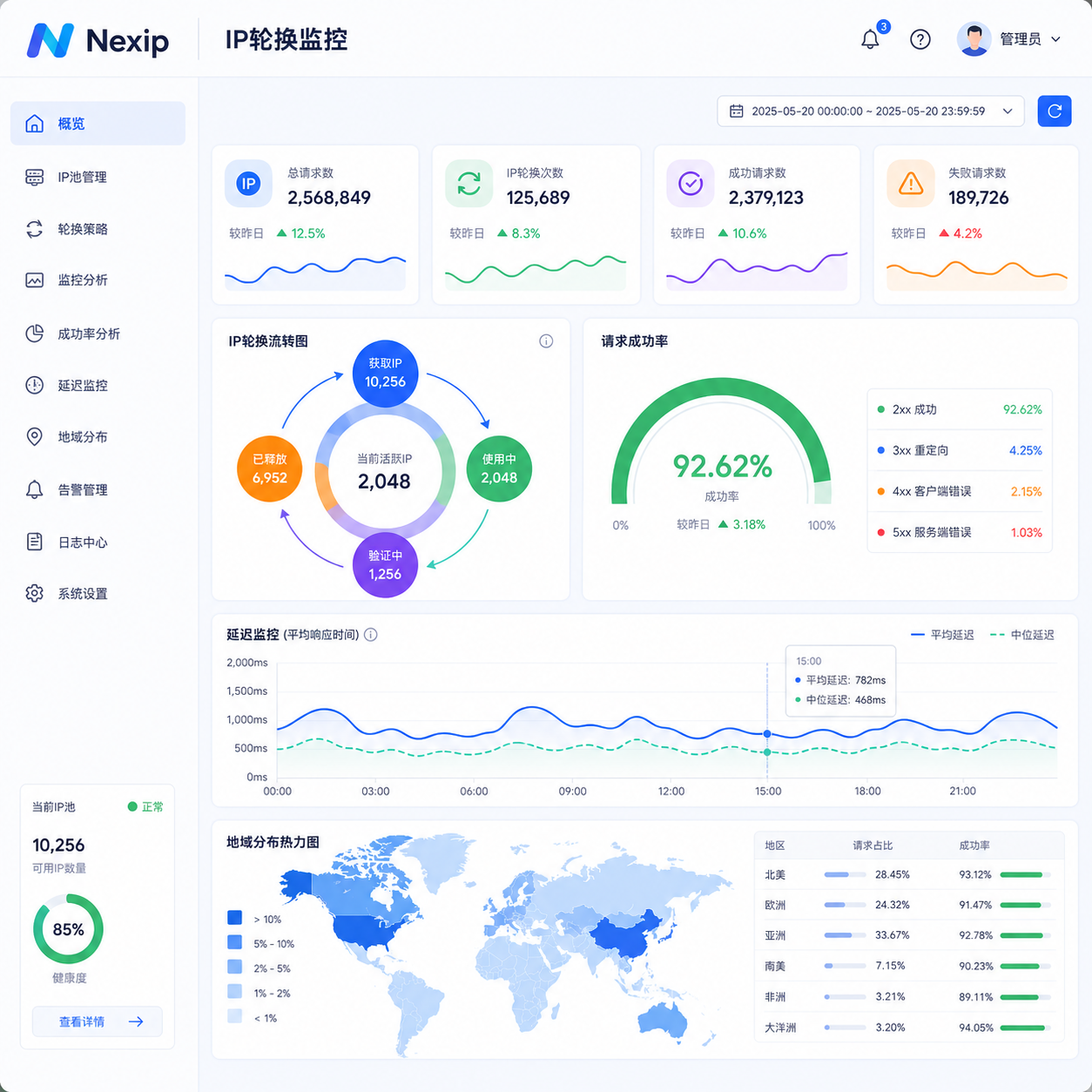
Geo-targeting is where residential proxies truly differentiate. City-level or finer targeting is needed to reproduce local rankings. A national brand dropping in key cities can cause bigger traffic loss than expected. Always verify the actual location of returned results, don't just trust configuration parameters. For multi-market campaigns, ensure the pool is large and diverse enough to avoid reusing the same IPs repeatedly.
Session management matters. Use sticky sessions for multi-step flows to maintain context; use rotation for bulk scraping to avoid hotspots. Implement exponential backoff for errors, distinguishing temporary failures from permanent bans. Remove failing IPs from rotation promptly. Monitor success rate, challenge frequency, and latency — these metrics are more useful than raw bandwidth consumption. If CAPTCHAs spike suddenly, check fingerprints and request patterns before adjusting parsers.
Common mistakes abound. Some think residential IPs allow unlimited scraping, but mechanical request patterns still get blocked. Others over-rotate, changing IP every request but behaving identically — the system still catches them. Some focus only on aggregate rankings, ignoring differences by region and device, resulting in pretty numbers that mislead decisions. And don't ignore compliance: only collect public SERP data, control frequency, respect robots.txt and acceptable use boundaries. The industry has tightened transparency requirements; when selecting a pool, prioritize ethically sourced and clean IPs to avoid trouble.
A practical implementation path: First, clarify your task — daily local keyword updates, competitor SERP comparisons, or cross-device monitoring. Choose a residential service that supports flexible rotation, sticky sessions, and precise geo-targeting. Providers like Nexip, which focus on residential proxies, offer dynamic rotation and city-level targeting, easily integrating with existing monitoring scripts or tools. After configuring the API or proxy list, run a small-scale test to observe success rate, location accuracy, and cost. Then gradually increase concurrency while setting up alerts. Bandwidth-based billing is often more flexible — you pay for what you use without estimating IP counts upfront, and can switch sticky strategies anytime.
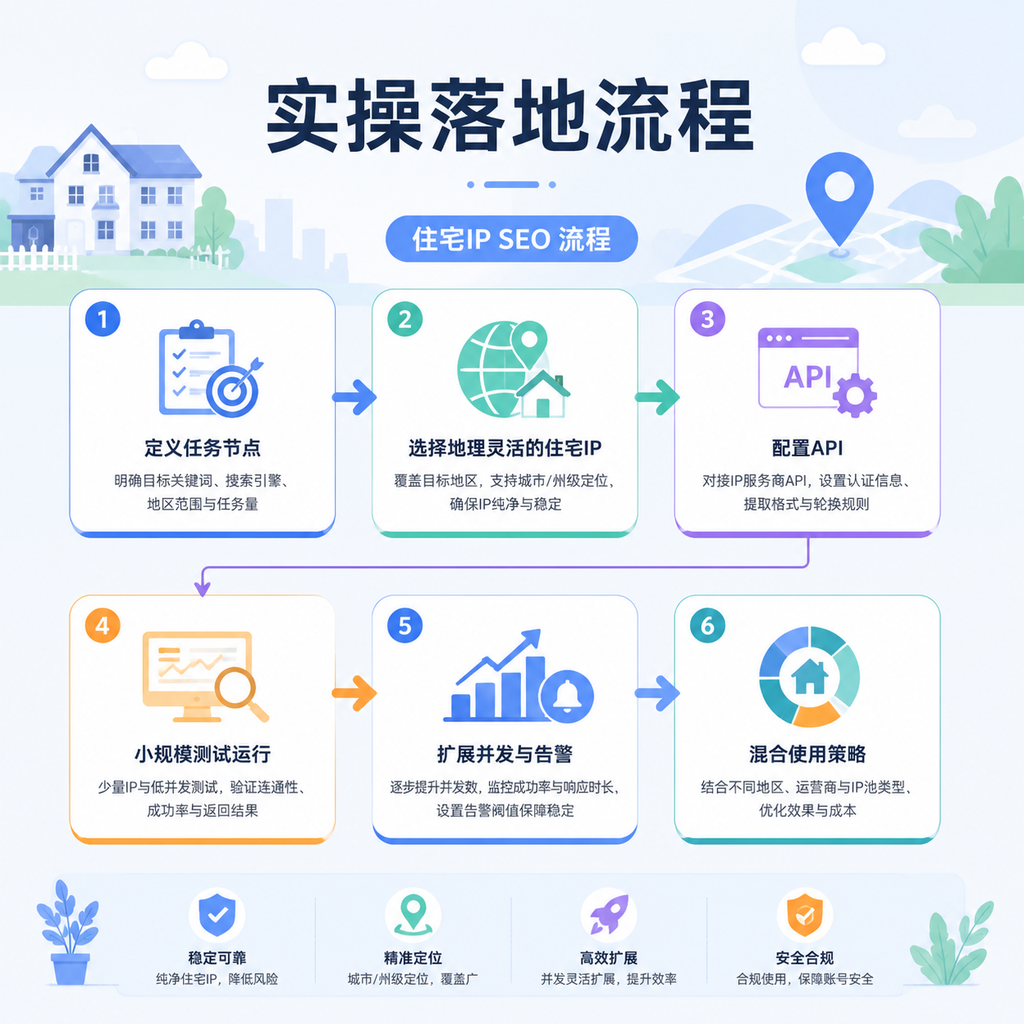
Cost-wise, residential is more expensive than datacenter, but the hidden costs of retries, data cleaning, and manual troubleshooting are saved, making it overall more economical. Especially during reporting cycles or intensive checks after algorithm updates, a stable pool ensures no data gaps. Use residential for core local and high-value keywords, supplement with datacenter for low-frequency or low-sensitivity tasks — a common hybrid optimization.
Over time, you'll realize the proxy layer isn't isolated. It must work with request header management, browser fingerprint masking, and parsing tolerance. Nexip's residential capabilities in such combinations behave naturally, supporting quick region and strategy switching. Regularly review failures, adjust rotation windows and delay parameters to keep up with search engine changes.
Final pitfalls: Avoid shared low-quality pools — historically dirty IPs contaminate the entire batch. Don't ignore time factors — behavior differs between peak and off-peak. Don't only look at success rate; whether data truly reflects user perspective is key. Connect these practical points, and ranking monitoring can shift from "frequently failing" to "stable and reliable." Dynamic residential IPs aren't a silver bullet, but used correctly, they become the foundation for clean local SERP data.


Comments(0)