 NexIP官方博客
The approach to risk-control network environment for Etsy seller accounts is to use "one store, one environment, one exit IP," and then conduct a four-layer self-check based on exit ASN attributes, exclusivity, stability, and environmental consistency. Many Etsy sellers think that having multiple IPs to rotate is safer, but for long-term logged-in sessions, frequent exit changes can easily trigger the platform's异地 protection mechanism. By 2026, mainstream platforms have upgraded risk control from simple blacklists to multi-dimensional joint scoring; the network environment is just one layer and cannot guarantee results alone. However, solidifying these four layers can significantly reduce the probability of verification requests and association rulings.
Principle First: One Store, One Environment, One Exit IP
The basic architecture of the risk-control network environment for Etsy seller accounts is "one store, one environment, one exit IP": each store corresponds to a unique set of browser fingerprint environment, bound to a dedicated static residential exit IP, with timezone, language, and system location strictly aligned with the IP's geolocation. This principle is not arbitrary; it is a common best practice in the cross-border industry after risk-control upgrades on platforms like Amazon, Etsy, and TikTok Shop.
Why emphasize "dedicated"? Because if the same IP is reused by many accounts, once one account is flagged, neighboring accounts in the same subnet may be subject to连带 review. This also directly answers the question "Can multiple Etsy stores use the same IP?"—it might be fine in the short term, but risks accumulate in the long run, especially with the enhanced same-subnet连带 risk control in late 2026, making one store with one exit IP almost a hard standard.
Layer 1: Check the Exit ASN Registrant—Can Etsy Sellers Log into the Backend with a Datacenter IP?
First, confirm the ASN (Autonomous System) ownership of the exit IP to determine whether it is a local residential broadband provider or a datacenter hosting provider. How to check? Use IPinfo or Ping0 to input the IP, and focus on the ASN organization name and ISP fields: If the ASN organization points to a local broadband ISP (e.g., common US residential ISPs), it is residential; if it shows a cloud provider or datacenter, it is a Hosting network segment. To determine whether a residential IP is a true dual-ISP, refer to How to Detect If a Residential IP Is a True Dual-ISP.
Datacenter IPs trigger verification at significantly higher rates on platforms like Etsy compared to residential networks. This directly answers "Can Etsy sellers use a datacenter IP to log into the backend?"—It's possible, but risky, especially during new-store verification periods. For "Does Etsy registration require a US residential IP?", a more accurate statement is: It is recommended to use a residential IP from the target market during registration because the ASN attribute of datacenter IPs is a clear negative signal in risk-control models. A residential IP combined with authentic information can reduce initial screening risks.
Layer 2: Check Exit Exclusivity and Same-Segment Neighbors—Why Shared Pools Cause Cross-Store 连带
After confirming the ASN attribute, you also need to check whether the IP is dedicated and whether the subnet it belongs to is heavily reused by many accounts. Shared residential pools are also residential IPs, but if the same /24 subnet is shared by hundreds of accounts, the IP may already be flagged by threat intelligence platforms.
How to check? Use IPQualityScore (IPQS) or Scamalytics to input the IP and check the 0-100 fraud score and proxy tags. Lower scores mean lower risk; higher scores significantly increase the probability of payment rejection and secondary CAPTCHA triggers. Payment gateways and platforms do not disclose their thresholds, but in practice, you can use low score ranges as your own acceptance line. These tools' scoring models come from global honeypot networks and proxy feature probes, and the scores directly affect payment success rates and the likelihood of triggering CAPTCHA on Etsy.
This layer is also the starting point for "How to troubleshoot if an Etsy store is flagged for关联": First, check the fraud score and proxy tags of the current exit IP, then see if the IP is in the same subnet as known risky IPs. If the score is high or flagged as proxy, prioritize replacement. A common industry practice is to record the IPinfo ASN field, IPQS fraud score, and Scamalytics risk level side by side to create an "IP health profile" for each store.
Layer 3: Will Frequent IP Changes for Etsy Backend Login Cause Bans? Conduct Continuous Sampling
The third layer is to verify that the IP stays stable throughout your login session. The method: Open the store backend in an anti-detect browser, record the current exit IP and location city every 15-30 minutes, and observe continuously for a work period (e.g., 4 hours). If the IP or city changes, it indicates insufficient session stickiness or you may be on a rotating pool—this is the mechanism behind "Will frequent IP changes for Etsy backend login cause bans?"
In scenarios requiring long-term logged-in states, exit drift directly triggers Etsy's异地 protection mechanism, leading to secondary verification or even temporary freezes. Therefore, continuous sampling should show: the IP remains unchanged throughout the period, and the city remains consistent. If drift occurs, switch to a line with session stickiness or static binding to ensure the exit remains fixed within a session.
Layer 4: Environmental Consistency—IP Location City, System Timezone, Interface Language, DNS & WebRTC Resolution
The final layer is environmental consistency. Align the following four items: IP location city, system timezone, browser interface language, and DNS & WebRTC resolution results. For example, if your IP shows Los Angeles, USA, then the system timezone should be Pacific Time, the browser language set to en-US, and DNS resolution and WebRTC leaked IP should also be US addresses, not your local ISP.
How to verify? Use BrowserLeaks to check whether WebRTC and DNS leak your real location. Common inconsistencies include: US IP paired with Beijing time, DNS resolving locally, or WebRTC exposing a domestic IP. These issues make the platform detect "environmental contradictions," increasing the risk of getting flagged. The recommended check order: First check IP location, then align timezone and language, and finally verify WebRTC and DNS.
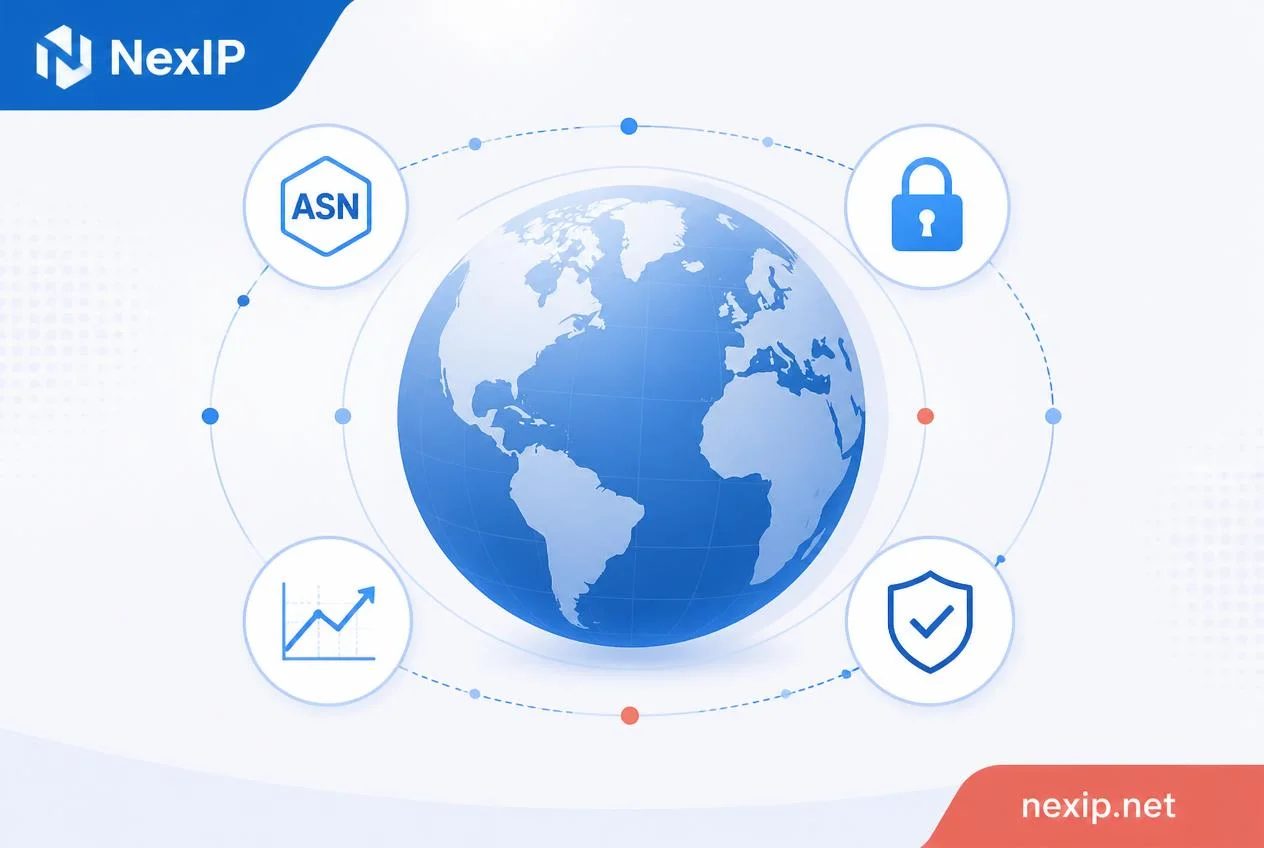
Correction: Why Frequent IP Rotation Is More Dangerous for Long-Term Login States
Some proxy providers promote "dynamic residential IP with high-frequency rotation is safer," but that applies to high-concurrency public data collection scenarios—like scraping large amounts of public product information, where changing IP with each request reduces the chance of rate limiting. Etsy store backend, however, involves "long-term account login state management," requiring a stable, self-verifiable exit. Frequent IP changes mean constantly jumping geolocations, which the platform will recognize as abnormal login behavior, thus more likely to trigger verification and freezes.
Therefore, the correction is: Distinguish between two usage logics. For data collection, dynamic IPs are fine, but for store backend login and registration verification, you must use a dedicated, long-term static exit. This is a common pitfall for many sellers.
Allocate Exits by Store Phase: Registration Verification, Daily Login, Product Research & Public Data Viewing
Different phases have different network environment requirements. It is recommended to allocate according to the table below; How to Configure IPs for Amazon Stores can also be a reference:
| Store Phase | Recommended IP Type | Key Requirements |
|---|---|---|
| Registration Verification | Dedicated static residential IP | Fixed city, ASN is residential ISP, IP unchanged long-term |
| Daily Backend Login | Dedicated static residential IP | No session drift, four-layer environmental consistency |
| Product Research & Public Data Viewing | Dynamic residential IP | Rotatable, no fixed city required |
This directly addresses "Should Etsy stores and Shopify independent sites use separate IPs?": If the two stores belong to the same entity and are business-related, it is recommended to separate them because platforms can detect underlying network associations, and shared IPs can easily cause cross-platform连带. Especially when the Shopify independent site involves payment gateways, a separate IP can reduce the risk of payment rejection due to shared exit.
Mapped to NexIP: Roles of Static Long-Term, Static Short-Term, and Dynamic Residential Bandwidth
If you need city-targeted residential IPs, NexIP's plans can correspond to the above three phases: Static long-term residential IPs suit registration verification and daily login, as their core value is "long-term unchanged, dedicated, fixed city," meeting the requirements of Layer 3 stability and Layer 4 location consistency. Static short-term residential IPs are suitable for phased project environments, like short-term events or tests; dynamic residential bandwidth is for product research and public data viewing. NexIP supports global region selection and city/ASN targeting, and can maintain session stickiness, which is crucial for Layer 3 self-checks.
Pre-Launch Self-Check Checklist
Condense the four-layer criteria of the risk-control network environment for Etsy seller accounts into a checkable list. The thresholds below are self-defined acceptance criteria, not platform-disclosed indicators.
- [ ] Exit IP ASN attribute is residential ISP, not Hosting
- [ ] IPQS fraud score is in the low range (you can set your own acceptance line, e.g., below 30), and no proxy/VPN tags
- [ ] Continuous sampling for 4 hours: no IP or city drift
- [ ] System timezone, language, WebRTC, and DNS are consistent with IP location
This checklist can be used before launching a new store or after a verification failure. It should be noted that Etsy does not disclose the weights and thresholds of each element in its risk-control model; these are actionable standards based on industry experience and do not constitute any promise of risk-control outcomes.
Frequently Asked Questions
Can multiple Etsy stores use the same IP?
Not recommended. If the same IP is shared by multiple stores, once one store has an issue, other stores in the same subnet are easily connected to the review. The safest approach is to bind each store to a dedicated static residential IP, achieving one store, one IP.
How to quickly troubleshoot if an Etsy store is flagged for association?
First, check the ASN attribute and IPQS fraud score of the current exit IP, then check whether it is in the same subnet as other risky IPs, and also verify that browser fingerprints are isolated. If the score is high or the subnet has risks, prioritize changing the IP and fingerprint environment.
Is it mandatory to use a US residential IP for Etsy registration?
It is recommended to use a residential IP from the target market during registration because datacenter IPs' ASN attributes are likely to trigger verification. A residential IP combined with authentic information can reduce initial screening risks, but it's not an absolute guarantee.
Will frequent IP changes for backend login cause a ban?
It significantly increases the probability of verification. During login sessions, frequent IP drift triggers异地 protection, leading to secondary verification or even temporary freezes. It is recommended to use a static residential IP with good session stickiness to keep the exit stable.
Should Etsy stores and Shopify independent sites use separate IPs?
It is recommended to separate them. If both sites share an IP, platforms can detect the underlying network association, easily causing cross-platform连带. Especially when payment gateways are involved, a separate IP can reduce the risk of payment rejection due to shared exit.


Comments(0)