 NexIP官方博客
The frequent updates of AI assistants have greatly benefited developers and heavy users, but the accompanying security risk control upgrades have also caused headaches for many. Recently, the Claude platform under the well-known AI company Anthropic has launched a new round of strict account reviews, leading to the banning of a large number of users and developers. In particular, users of command-line tools, even those who have purchased subscription services, have not escaped the fate of being banned.
In this protracted game of risk control, the stability and purity of the network environment have become key factors determining the survival of accounts. To survive the strict system detection, using high-quality residential IP for anti-association and traffic camouflage has become an industry-recognized effective method. This article will delve into the underlying logic of recent risk control mechanisms to help users avoid account ban pitfalls.
Covert Markers and Source Code Reverse Engineering: The Logic Behind Claude Code Bans
A recent technical discovery has uncovered the tip of the iceberg of Claude's large-scale account bans. In early July, a developer conducted a reverse engineering analysis of the client source code of the command-line AI programming assistant (Claude Code). The results showed that the client embedded a highly covert user tagging and telemetry mechanism that deeply profiles the user's local development environment.
During operation, this telemetry system automatically collects over 600 different types of telemetry events. These include the user's local device unique identifier, operating system version, command-line shell, package manager, and local development configuration. All this characteristic data is secretly embedded in each sent request.
For domestic developers, this mechanism essentially establishes a high-precision device fingerprint. Once the local environment leaks physical characteristics or frequently switches between different IPs, the system backend will immediately raise an alert. The automated review system will make a judgment in a very short time, leading to account suspension within minutes.
The Iron Curtain of KYC: Introduction of Persona Platform for Identity Verification
Beyond underlying code tracking, since mid-June, the system has also comprehensively upgraded its Know Your Customer (KYC) mechanism. Anthropic announced a partnership with third-party identity verification service provider Persona to enforce real identity verification during subscription billing and risk control alert stages. Many users found their accounts temporarily locked and were presented with a page requiring upload of government-issued ID and facial selfies.
Because Persona has financial-grade detection methods and has faced data security controversies, many privacy-conscious overseas users directly canceled their $100 monthly subscriptions. Domestic users and those in unsupported regions face a harsher reality. Once verification is required, lacking valid documents from supported countries, the account is almost sentenced to death.
The system not only restricts ordinary users but also well-known open-source agent project initiators who have faced unannounced bans this year. Even after paying interface fees, they were automatically blocked due to third-party calls. This incident proves to the industry that the platform's risk control upgrades have evolved from crude strategy restrictions to comprehensive behavior pattern recognition.
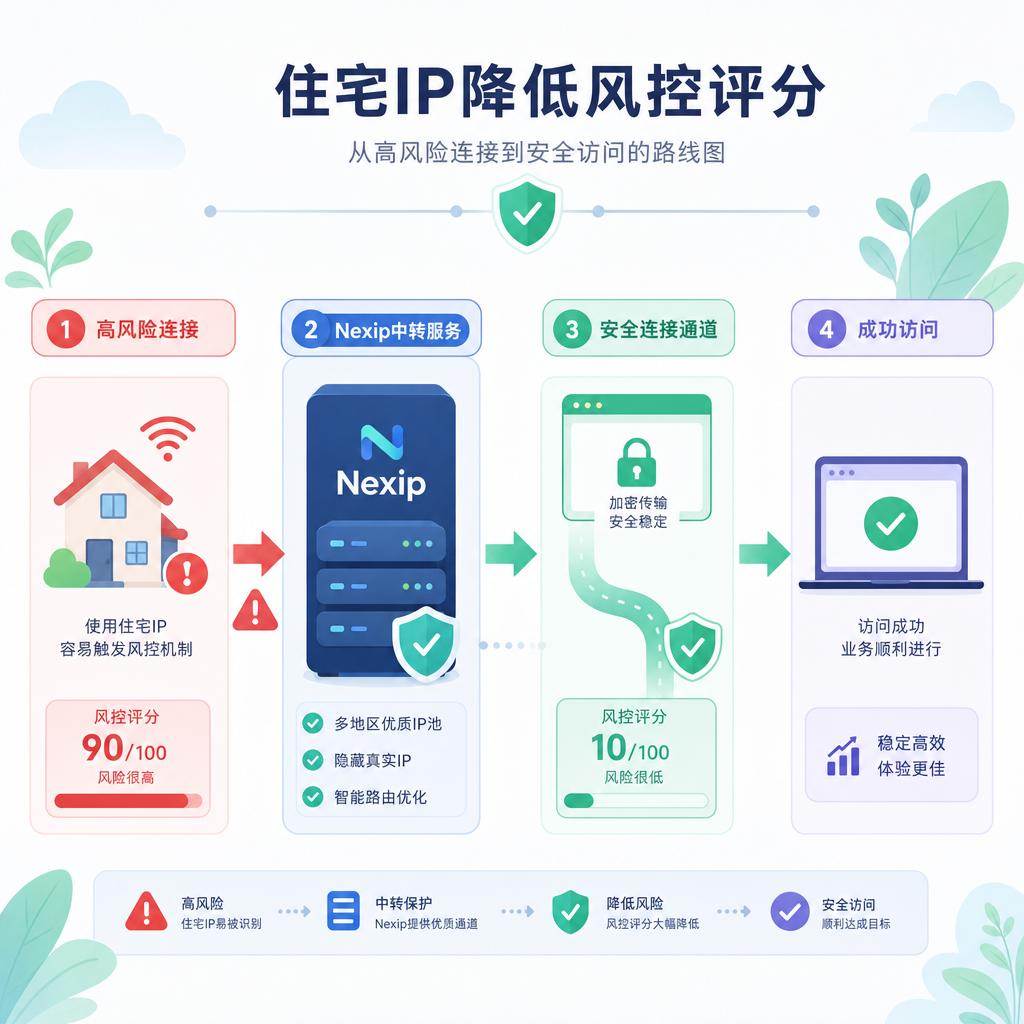
Reducing Risk Scores: A Roadmap for Residential IP Anti-Ban
Of all reasons for account suspension, network addresses being blacklisted or marked as high-risk datacenter proxies account for about 60% of total ban causes. If your exit IP is detected as a cheap datacenter address, the system will automatically classify it as bot abuse traffic, triggering the strictest verification procedures.
To bypass this filter, using pure overseas residential IPs is crucial. High-quality network proxies can perfectly simulate real home broadband users, making it impossible for the backend firewall to distinguish them from ordinary overseas netizens. When selecting and configuring proxy networks, users typically need to follow these principles:
- Prioritize exclusive network nodes, avoiding shared cheap public nodes used by thousands to prevent collateral bans due to others' violations.
- When performing high-frequency API calls or coding tasks, maintain session stickiness and stability, avoiding frequent changes in physical location within minutes.
- Use fingerprint browsers to isolate the local environment, cutting off hardware-level marker exposure like NIC info and Canvas fingerprint.
- Disable geolocation services on phone or computer, and remove physical SIM cards that might expose geographical attribution to avoid base station location conflicts.
- During registration and payment, the billing address of the bound virtual credit card should match the current physical exit geolocation.
Long-Term Compliant AI Usage Solutions
With continuous updates in risk control technology, traditional proxy tools struggle to penetrate increasingly stringent defenses. To ensure stable operation of development processes and enterprise AI business, besides enhancing local environment isolation, the choice of underlying network resources must shift to more compliant commercial channels. Using independent broadband nodes from legitimate service providers will be an unavoidable trend.
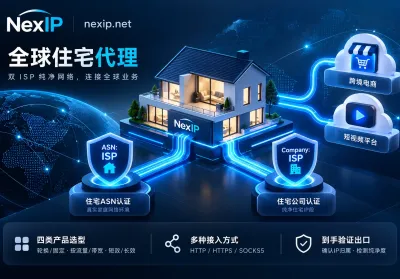
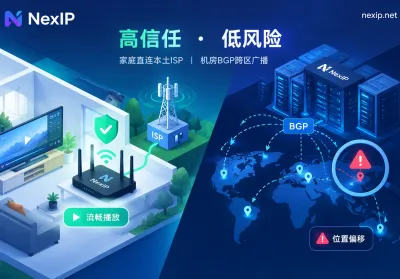
In actual deployment, by deploying Nexip's high-end dynamic residential IPs, users can cloak each network access with a compliant home user profile without changing local physical devices. Nodes from such services originate from real residents' network access points with high IP reputation, greatly reducing the probability of triggering identity verification during access.
As major AI platforms gradually tighten usage permissions for APIs and web interfaces, relying on crude camouflage schemes can no longer ensure business continuity. Developers and heavy users must recognize that long-term account survival depends not on single tips but on systematic construction of hardware fingerprint isolation, payment billing consistency, and network exit purity.


Comments(0)