 NexIP官方博客
When encountering Claude KYC verification, the first step is to triage based on the popup type: if it's Persona verification, immediately check the ASN ownership and usage type of the egress IP; if it's a payment error, verify consistency between the card's issuing country and the IP's geolocation.
Anthropic's official list of supported regions, visible as of September 2025, does not include mainland China and other areas. Industry tests have observed that Persona-driven identity verification has been concentrated since April 2026. Network-layer optimization aims to improve trust scores but cannot change access eligibility based on service region.
Triage for Claude KYC Verification
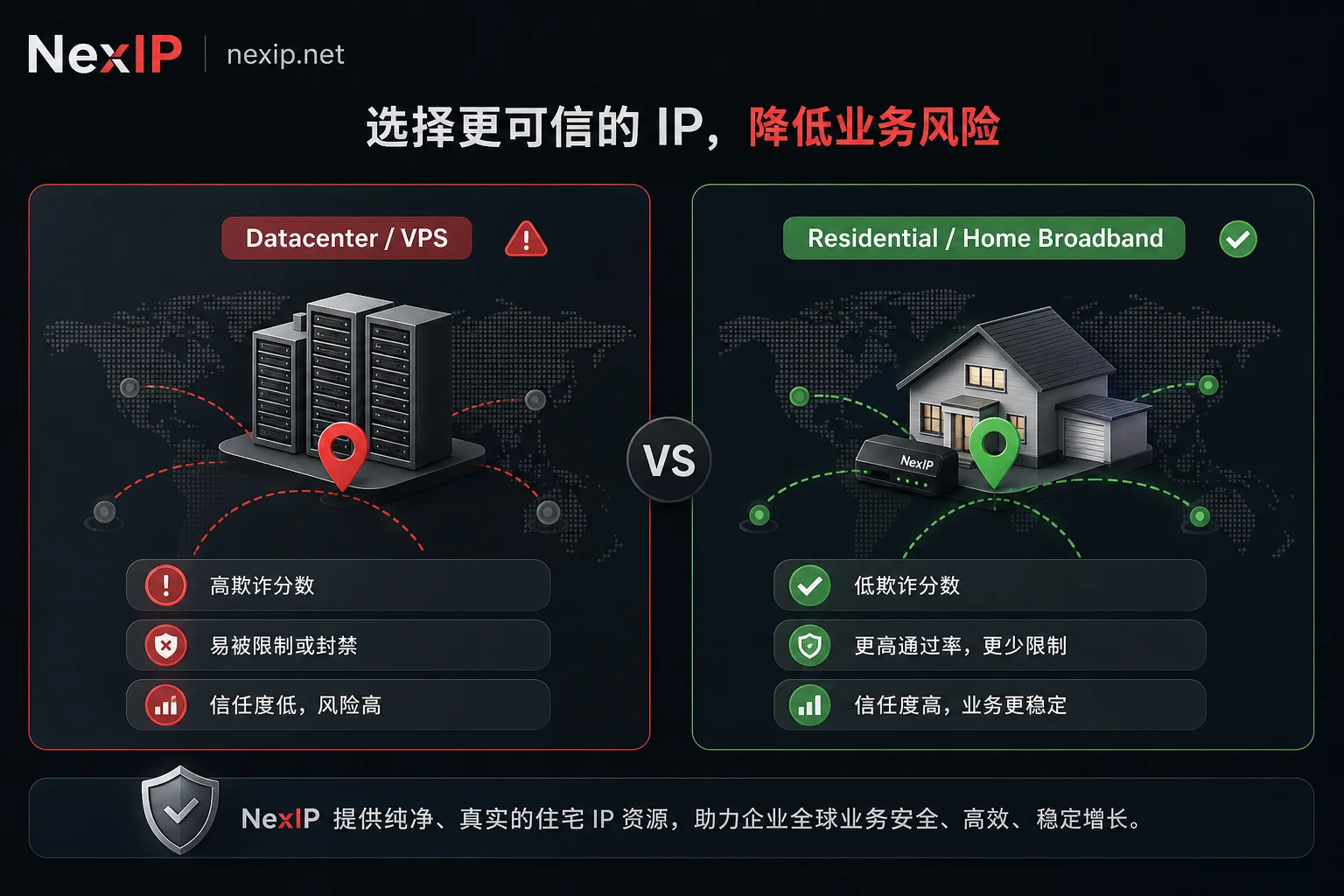
When facing different manifestations of Claude KYC verification, first triage based on the popup type. If document upload and selfie verification appear, focus on the ASN ownership of the access layer; if the page is directly restricted, confirm whether you are in a non-supported region; if errors occur only during subscription, focus on payment layer consistency.
| Popup/Error Type | Core Area | Key Check Fields |
|---|---|---|
| Persona ID + Face Verification | Access Layer Trust | ASN Registrant, Usage Type, Fraud Score |
| Page Access Restricted/403 | Regional Compliance | Whether IP's country is in supported list |
| Your card has been declined | Payment Layer Consistency | Card Issuing Country, Billing Address, Egress IP Geolocation |
The prerequisite for this decision tree is understanding Anthropic's risk control logic: it distinguishes between "non-human behavior" and "real user collateral damage."
ID and Face Verification Branch: ASN and Shared Pools
When the system prompts Persona to upload ID and face, it means the current network egress has failed basic trust checks. At this point, delve into the underlying properties of the egress IP.
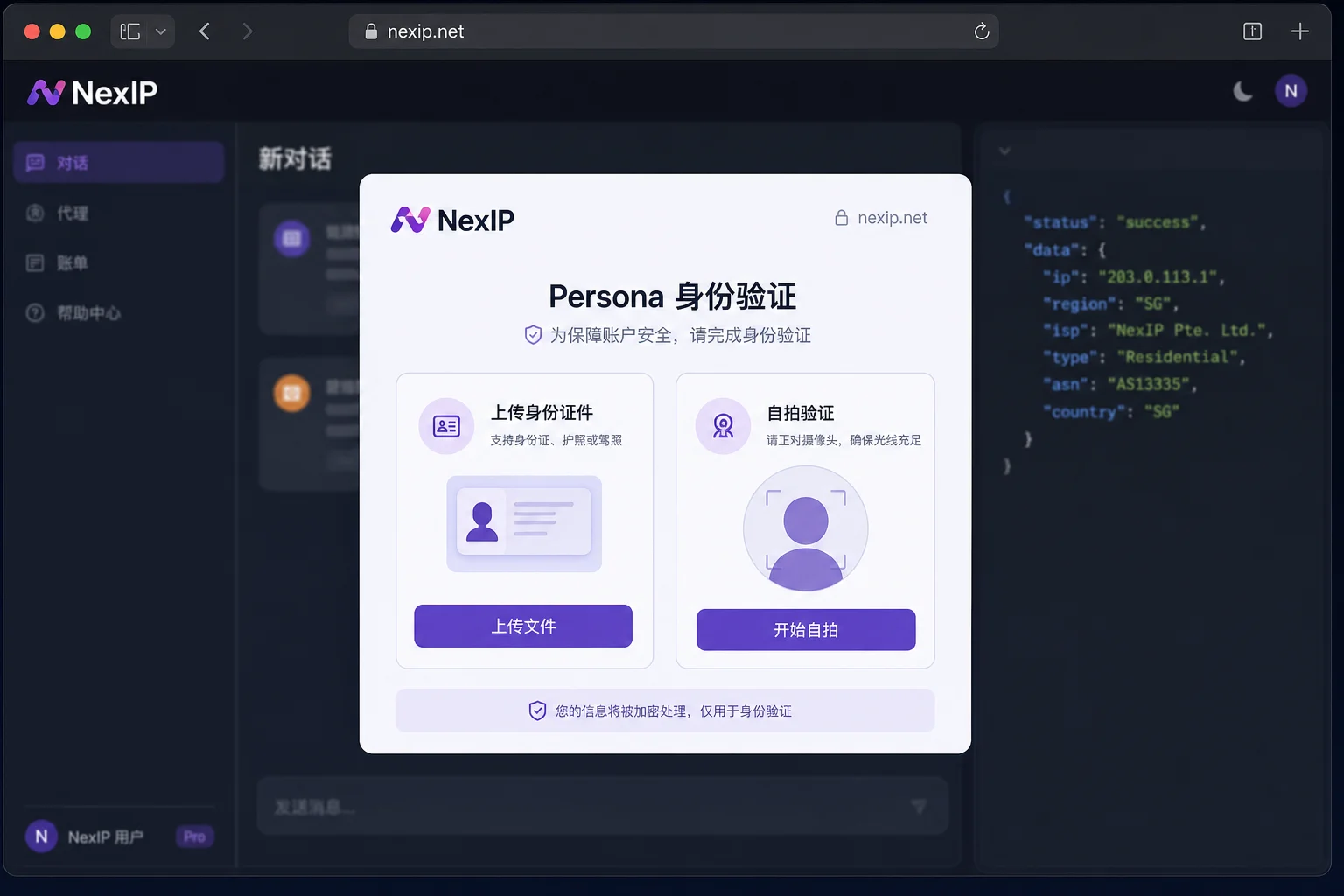
First, query the ASN number of the IP and the registered organization name. If the owner is a cloud service provider or hosting company (Hosting/Datacenter) rather than a local broadband operator, the risk is high. Second, check if the IP's usage type is marked as hosting or business. Many reputation databases flag such IPs as proxies or high-risk sources.
Furthermore, cheap shared proxies suffer from "neighbor pollution." Misuse by other users in the same subnet can cause the entire block's fraud score to skyrocket. If sampling over ten consecutive minutes shows egress IP drift or segment changes, it is also unacceptable. If any indicator is abnormal, it is recommended to switch to a clean egress before retrying. If popups persist after multiple switches to clean residential IPs, the issue may extend beyond the network layer; in that case, stop self-troubleshooting and turn to official channels for appeal.
Subscription Payment Decline Branch: IP and Card Geolocation Consistency
For users receiving "your card has been declined" when subscribing to Claude Pro, the problem often lies in Stripe Radar's real-time risk control. Even if the card has sufficient funds, the payment process strictly verifies the attributes of the accessing IP.
Stripe primarily compares geographic consistency across three dimensions:
- The country of the egress IP at the time of payment. Before payment, use an IP geolocation lookup tool to confirm the current egress country.
- The issuing country of the card based on its BIN. Check the card information provided by the issuing bank or BIN ownership records.
- The country of the billing address provided. Verify that the billing address country matches the previous two.
If the three are inconsistent, or if the egress IP is marked as Hosting with a high fraud score, the transaction will be directly blocked. Temporarily switching nodes or using different egress points for access and payment exacerbates this inconsistency. Therefore, ensuring a stable network environment with matching geolocations is crucial.
Endpoint and Egress Cross-verification: Environment and WebRTC
Building network-layer trust requires cooperation from the endpoint environment. The browser timezone and system language should align with the egress IP's region. For example, if the egress is in the US but the timezone is still UTC+8, the environment will be considered inconsistent.
Also, check whether DNS resolution goes through the local ISP rather than domestic recursive servers. Use detection tools to view WebRTC ICE candidates; if a second public address (i.e., the real local IP) is exposed besides the proxy egress, anonymity and trust will be severely compromised. For specific technical details on WebRTC leaks and their impact on proxy IP security, refer to relevant analyses. The core is ensuring all network requests go through the intended egress, preventing information leakage that could escalate risk control.
Common Misconceptions and Egress Selection
Many users believe that frequently switching nodes can evade tracking, but the opposite is true. Login trajectories that jump across regions in a short time are more characteristic of account theft or automated scripts, easily triggering risk control. Additionally, using VPS or cloud servers as egress is not a panacea. Because these devices' ASNs naturally belong to Hosting, even if reachability is good, their trust scores are far lower than home broadband. For why datacenter IPs are easily identified as high-risk IPs, the root cause is the vast difference between their infrastructure attributes and normal personal user behavior. Similarly, whether ChatGPT's intelligence downgrade is an IP issue also reveals the potential interference of the same type of network environment on AI model response quality.
Depending on the usage scenario, egress selection strategies should differ. For long-term login and use of Claude Code, a dedicated, static, residential IP with a local broadband ASN is needed. Such IPs effectively avoid neighbor pollution and egress drift, as noted in how to solve high fraud scores for proxy IPs, where purity is key to lowering fraud scores. For such long-term configurations, NexIP's static long-term residential IPs can be a viable option, with session stickiness features that help maintain stable login states. When setting regional targeting, ensure it matches the card's issuing country, the account's usual login region, and the endpoint timezone. If session stickiness duration is too short, egress segments may change during the same login session; if too long, it must align with the platform's tolerance for connection stability. For tasks requiring only public content retrieval without login states, dynamic residential bandwidth is more suitable due to its pay-as-you-go model and high turnover.
| Usage Scenario | Recommended Egress Type | Key Configuration Parameters | Notes |
|---|---|---|---|
| Long-term Login/Claude Code | Static Dedicated Residential IP | Fixed ASN, Region/City Targeting, Session Stickiness Duration | Avoid frequent connection restarts |
| Subscription Payment/Verification Period | Staged Fixed Egress | Same IP for Access and Payment | Ensure card geolocation matches IP |
| Public Content Retrieval | Dynamic Residential IP | High Concurrency, Short Validity | No need to maintain login state |
Post-switch Review Checklist
After switching egress, verify each item to ensure environment compliance:
- Is the ASN registrant of the egress IP a local broadband operator?
- Is the Usage type confirmed as residential?
- Are fraud scores and proxy flags consistently low across multiple reputation databases?
- Over 30 minutes of sampling, does the egress remain the same address and subnet?
- Does the browser timezone and language align with the egress region?
- Does DNS resolution belong to the egress region?
- Does WebRTC only expose the egress address without local IP leaks?
- Are access and payment using the same egress?
- Does the card's issuing country match the egress country?
Only if all the above items pass can network-layer trust issues be considered preliminarily resolved. Use this checklist to verify egress ASN, fraud score flags, and endpoint consistency.
If the current datacenter or shared pool egress is deemed unqualified, consider NexIP's static long-term residential IPs as an alternative to improve network-layer trust scores.
FAQ
What to do if Claude requires ID upload and face verification?
First, confirm whether the current egress IP is a datacenter or shared proxy. If so, switch to a clean static residential IP and retry. If popups persist after switching, the account may have abnormal historical behavior. The official process after verification failure is not disclosed; users can only submit via official appeal channels and retain egress environment self-check results as evidence.
What does Persona verification actually mean?
This is a third-party identity and business verification mechanism introduced by Anthropic for routine platform integrity checks. It requires physical documents and dynamic face matching to confirm user authenticity. This is entirely different from standard SMS phone verification, targeting suspected bots or high-risk network environments.
What to do if the card is declined during subscription?
First, check if the IP geolocation matches the card's issuing country. If using a VPN or proxy, ensure the egress is not marked as Hosting. Try disabling the proxy for direct connection, or switch to a residential IP that matches the card's issuing country and retry payment. If it still fails, contact the bank to confirm if there are international transaction restrictions.
Will using a VPS IP to access Claude trigger verification?
Very likely. VPS ASNs are typically registered as Hosting or Datacenter, lacking home broadband attributes, making them easily judged as non-real users by risk models. Even if not triggered initially, long-term use may lead to permission restrictions or KYC popups due to environmental mismatch.
Will frequently switching nodes get flagged?
Yes. Frequent jumps across different countries or cities match the behavior patterns of attackers probing vulnerabilities or account thieves. It is recommended to maintain stable egress IPs and geographic consistency, avoiding drastic changes in network environment over short periods to prevent triggering higher-level security reviews.



Comments(0)