 NexIP官方博客
Residential Proxies Are the Standard Answer: Why Datacenter IPs Fail
The core obstacle in scraping Amazon's public competitor prices lies in the platform's strict anti-scraping mechanisms. Amazon's WAF (Web Application Firewall) can identify commercial datacenter IPs at the network packet level based on Autonomous System Number (ASN), assigning extremely low reputation scores to datacenter proxies. In practice, using datacenter IPs to access product detail pages might result in a 503 block during the handshake or a Robot Check CAPTCHA after a few requests, making bulk scraping nearly impossible.
Residential proxies are assigned by real broadband service providers (ISPs) and carry the reputation of home networks, making it hard for Amazon to immediately flag them as automated traffic. This makes residential proxies the de facto industry standard for e-commerce price monitoring—not because they bypass rules, but because they are legitimate network exits that simply route your requests through real devices from different geographic locations and ISPs.
Rotating vs. Sticky Sessions: Depends on Whether the Task Is Single-Fetch or Multi-Step Interaction
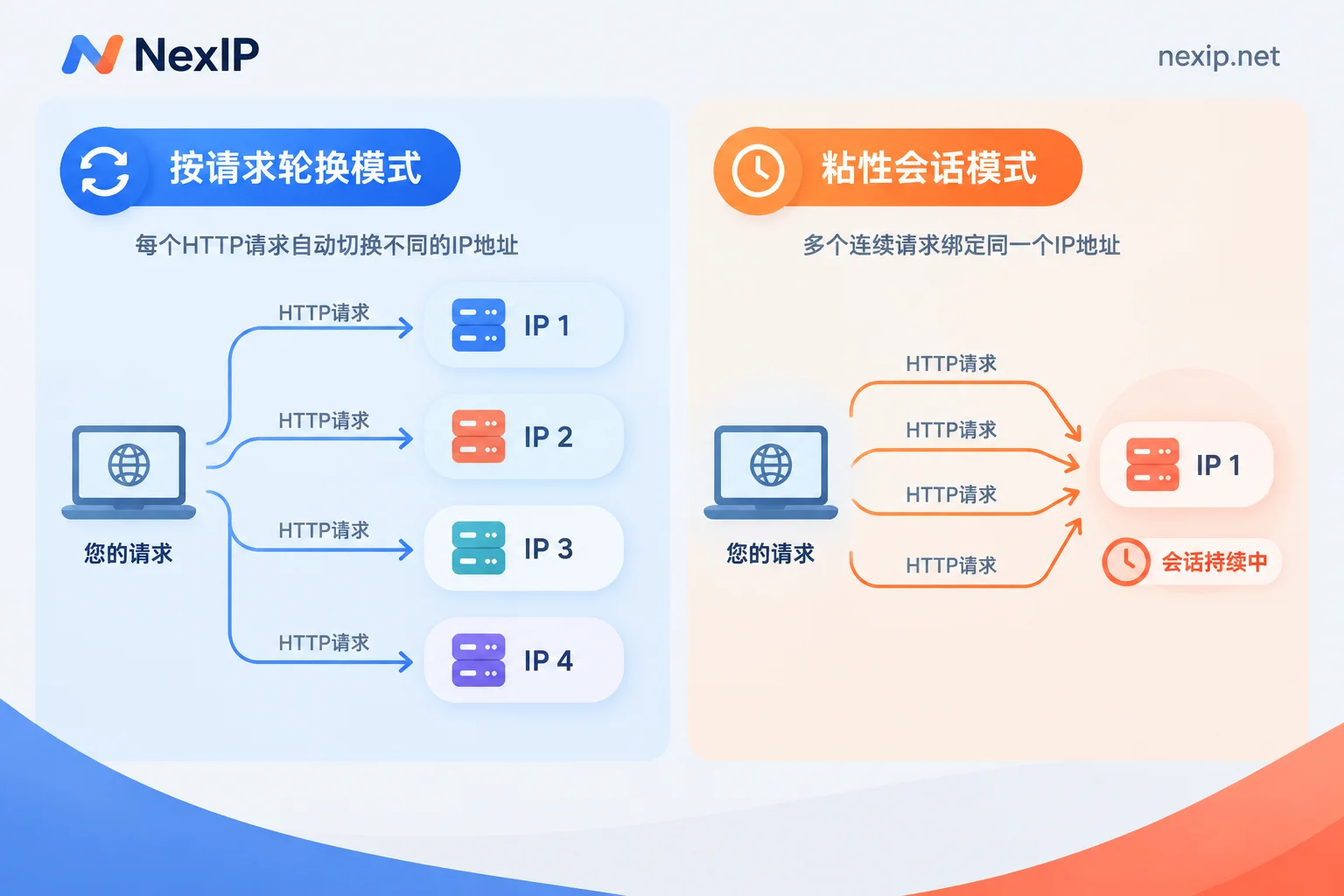
Residential proxies typically offer two session strategies: per-request rotation and sticky sessions.
Single Quote Scraping: Per-Request Rotation
If your task is to bulk scrape public prices for many ASINs, with each request being independent and not requiring session state, then you should choose per-request rotation mode. Each HTTP request automatically switches to a different exit IP, preventing a single IP from being rate-limited due to high access frequency. Typical scenarios for this mode include:
- Crawling category pages or search results to scrape product lists
- Requesting Product Detail pages directly by ASIN list to get titles, images, and listed prices
- Periodically refreshing an established SKU database in full
Setting ZIP Codes or Simulating Browsing: Sticky Sessions
Amazon's final displayed price, shipping fees, and Buy Box ownership often adjust dynamically based on the delivery address. If your scraping workflow includes:
- First writing the delivery ZIP Code into cookies
- Then refreshing the page to get the price and stock status for a specific region
- Or needing to click "See all buying options" to expand offers from different sellers
Such multi-step interaction tasks must use sticky sessions to ensure these steps are sent from the same IP, allowing the platform to recognize them as the same session context. Sticky sessions can typically last from a few minutes to tens of minutes, and after completing the full scraping process for one product, you can switch to the next IP.
Traffic-Based vs. Bandwidth-Based Billing: Depends on Business Scale and Request Density
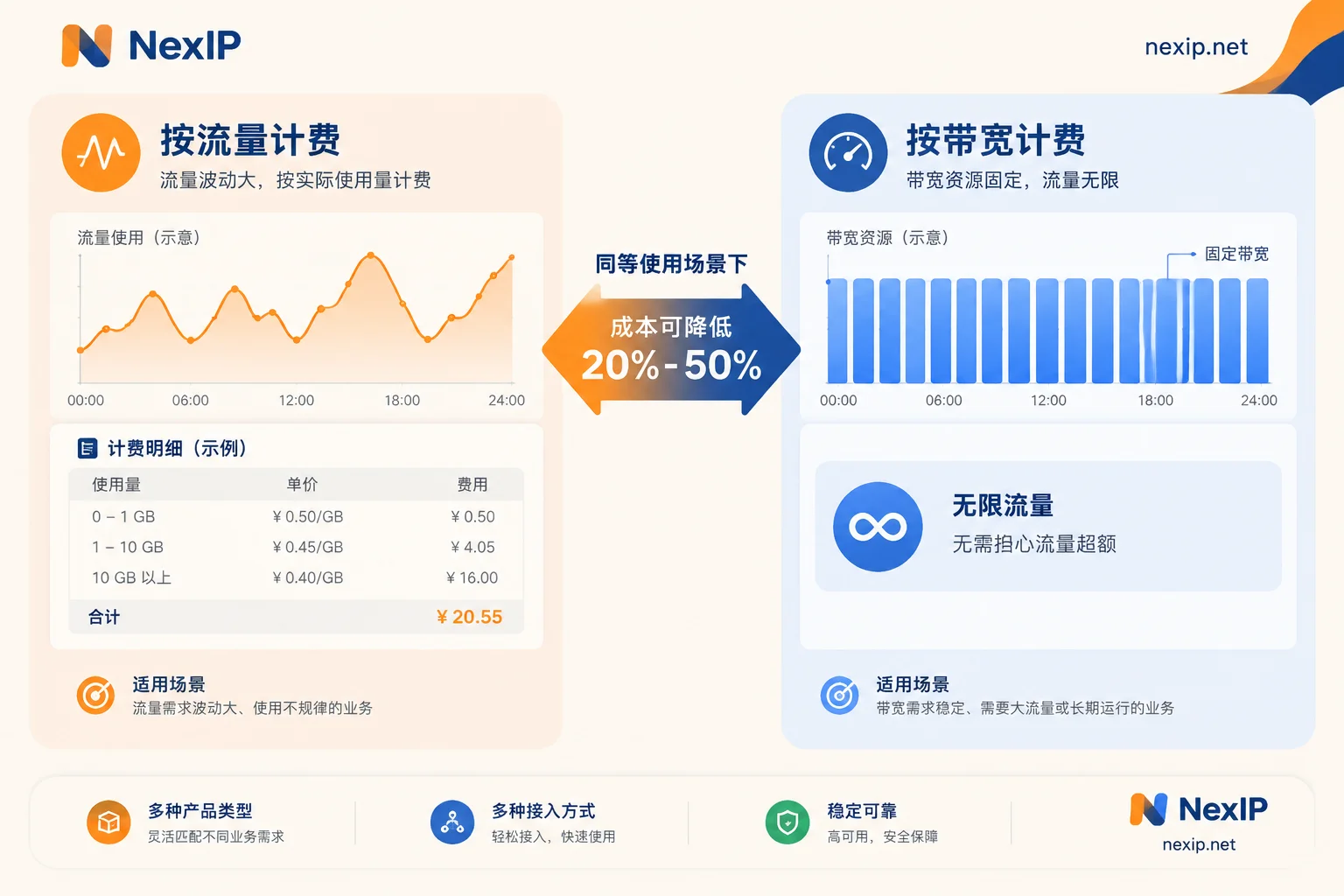
Residential proxies mainly have two billing models: traffic-based billing and bandwidth-based billing.
Traffic-Based Billing: Suitable for On-Demand and Small-to-Medium Scale Tasks
If your scraping tasks are:
- Single or periodic lightweight scraping (thousands to tens of thousands of requests per day)
- Request volume is variable with clear peaks and troughs
- Cost-sensitive, wanting to pay only for what you use
Then a traffic-based dynamic residential plan is more suitable. You pay for the actual data traffic consumed, and no cost is incurred when not in use.
Bandwidth-Based Billing: Suitable for 24/7 High-Concurrency Pipelines
If your business is:
- A 24/7 continuous price monitoring system
- Constant and extremely high concurrent request numbers (e.g., maintaining hundreds of scraping processes simultaneously)
- Total daily traffic reaching hundreds of GB or even TB levels
Then a bandwidth-based, unlimited traffic plan can significantly control costs. You pay for fixed bandwidth resources, and the actual amount of data transmitted is no longer charged extra. This model is better suited for industrial-grade data pipelines, not occasional scripts.
Other Configuration Points: Region, Protocol, and Authentication
Country Targeting Must Match the Target Site
The proxy IP's country must match the Amazon site you are scraping. Use US IPs for amazon.com, German IPs for amazon.de, etc. This ensures that the default currency, local listing status, and recommendation algorithms align with real visitors.
However, note: The proxy IP only controls the network exit; the precise delivery ZIP code still needs to be explicitly set in request headers, cookies, or page interactions. Don't expect that switching to a New York IP will automatically get you the price for ZIP code 10001 in New York—you still need to write the corresponding ZIP Code into your scraper logic and verify it takes effect.
Protocols and Authentication Methods
Most residential proxies support HTTP/HTTPS and SOCKS5 protocols, with authentication via username/password or IP whitelisting. For distributed scraping clusters, IP whitelisting is more convenient; for local development or single-machine scripts, username/password authentication is more flexible.
Verification: Don't Just Look at HTTP 200
After receiving a response, you cannot judge scraping success solely based on HTTP status code 200. Amazon may return a 200 status code, but the page content could be a CAPTCHA, a "To discuss automated access to Amazon data please contact [email protected]m" message, or a blank page.
You need to add content feature checks in your code:
- Parse the response HTML to confirm that the price node (e.g.,
span.a-price) exists and has a value - Check if the page title contains "Robot Check" or CAPTCHA keywords
- Verify that key fields like product title and ASIN are returned normally
At the same time, ensure that your request headers (User-Agent, Sec-Ch-Ua) and TLS fingerprint match the real device characteristics of the residential IP. If you use a residential IP but the request headers expose automation tool features, the platform will still block you.
How to Choose After All This
Based on the above analysis:
- Regular single quote scraping, bulk ASIN price refresh: Dynamic residential proxies + per-request rotation + traffic-based billing
- Need to set ZIP code, multi-step browsing for regional prices: Dynamic residential proxies + sticky sessions + traffic or bandwidth (depending on scale)
- 24/7 high-concurrency monitoring: Dynamic residential proxies + bandwidth-based billing + rotation or sticky (depending on task)
If you are doing Amazon price scraping, you can choose NexIP's dynamic traffic plan (traffic-based billing, supports rotation and sticky sessions) or dynamic bandwidth plan (bandwidth-based billing, unlimited traffic) based on your task type. Integration supports API, username/password, port forwarding, and you can configure country, session duration, and authentication in the official panel or client.
After choosing the exit type, the next step is to integrate the proxy into your scraping script, configure request headers and ZIP code logic, and then verify the completeness of response content in small-scale tests.


Comments(0)