 NexIP官方博客
Hotels and price comparison teams constantly monitor real-time prices, availability, and reviews on OTAs like Booking.com and Expedia. Dynamic pricing can change multiple times a day, and missing a window means lost bookings. Scraping yourself? Anti-scraping measures are tough and fast, data center IPs get blocked within minutes. Dynamic residential IPs become essential, but only if used correctly.
First, why residential? These platforms classify travel aggregators as high-protection layers. Data center IPs trigger blocks immediately, with success rates often dropping to 40-60%. Residential IPs come from real home broadband, making the site think it's a regular user browsing hotels, boosting success rates above 90%. Failed requests consume bandwidth and time, making real costs higher. Those who've done the math know: for the same target, low-success options may cost 30% more traffic. When choosing proxies, assess target difficulty first, then consider price.
In practice, rotation and stickiness must be used together. Pure rotation works for scanning lists and comparing prices, scattering requests to avoid rate limits. But once you need to log in, apply filters, or click into detail pages for calendars or policies, jumping IPs can trigger anomaly detection. Most production systems set dynamic residential IPs with 10-30 minute sticky sessions: IP fixed during a single search flow, then rotated. This mimics human behavior while enabling batch processing. For multi-account or cross-region monitoring, add longer stickiness to maintain session continuity.
Geolocation is the soul of travel scenarios. The same hotel shows different prices, currencies, and promotions under IPs from different countries. Target the US market with US residential egress, Europe with local ISPs. The IP pool must be large enough; otherwise, popular destinations like Brazil or Southeast Asia suffer from scarce IPs, and repeated hits on the same node get you flagged. When configuring, prioritize services supporting country, city, or even ASN filtering. Nexip's compliant dynamic residential IP pool balances coverage and session control well, directly integrating with scraping scripts to reduce maintenance overhead.
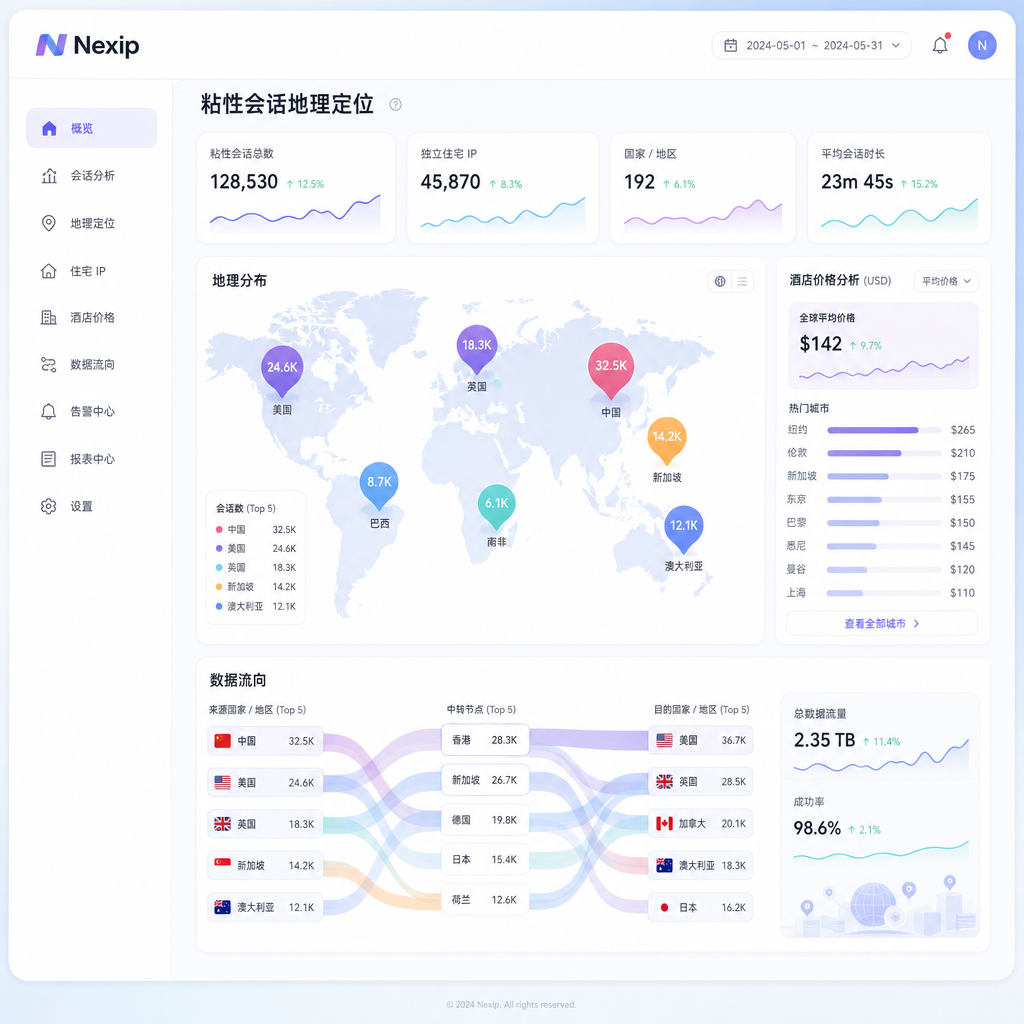
Don't overcomplicate the configuration. First, use Playwright or similar tools to render JS—OTA lists often lazy-load, and plain requests won't fetch full cards. Then, mount residential proxies: set authentication, protocol (HTTP/SOCKS5 both work), enable auto-rotation while specifying session duration. Request intervals should be at least 2-5 seconds, randomized if possible, never fixed rhythm. When extracting fields, focus on hotel name, nightly price, star rating, score, review count, location—CSS selectors change, so periodically review with DevTools. Handle pagination with query parameter loops, stop on empty results. Finally, clean: prices remove symbols, convert to numbers; scores and reviews extract via regex; export to CSV or directly to database.
Common pitfalls pile up. Using data center IPs to save costs leads to explosion of retries and budget overruns. Not maintaining the IP pool degrades quality, silently dropping success rates. Target ASN blacklisting and TLS fingerprint matching will finish you. Fingerprints and proxies must match—browser UA, timezone, language consistent with egress IP; otherwise, even good residential IPs will be exposed. Too aggressive rate triggers CAPTCHAs or hard bans. Compliance: many cheap pools mix infected devices; the botnet scale has been rising recently, from millions of endpoints upward, bringing real DDoS and abuse risks. When choosing a service, prioritize ethical sources, consent mechanisms, and comprehensive documentation to avoid complicity. Nexip emphasizes native compliant supply, blocking risks at the entry point for teams.
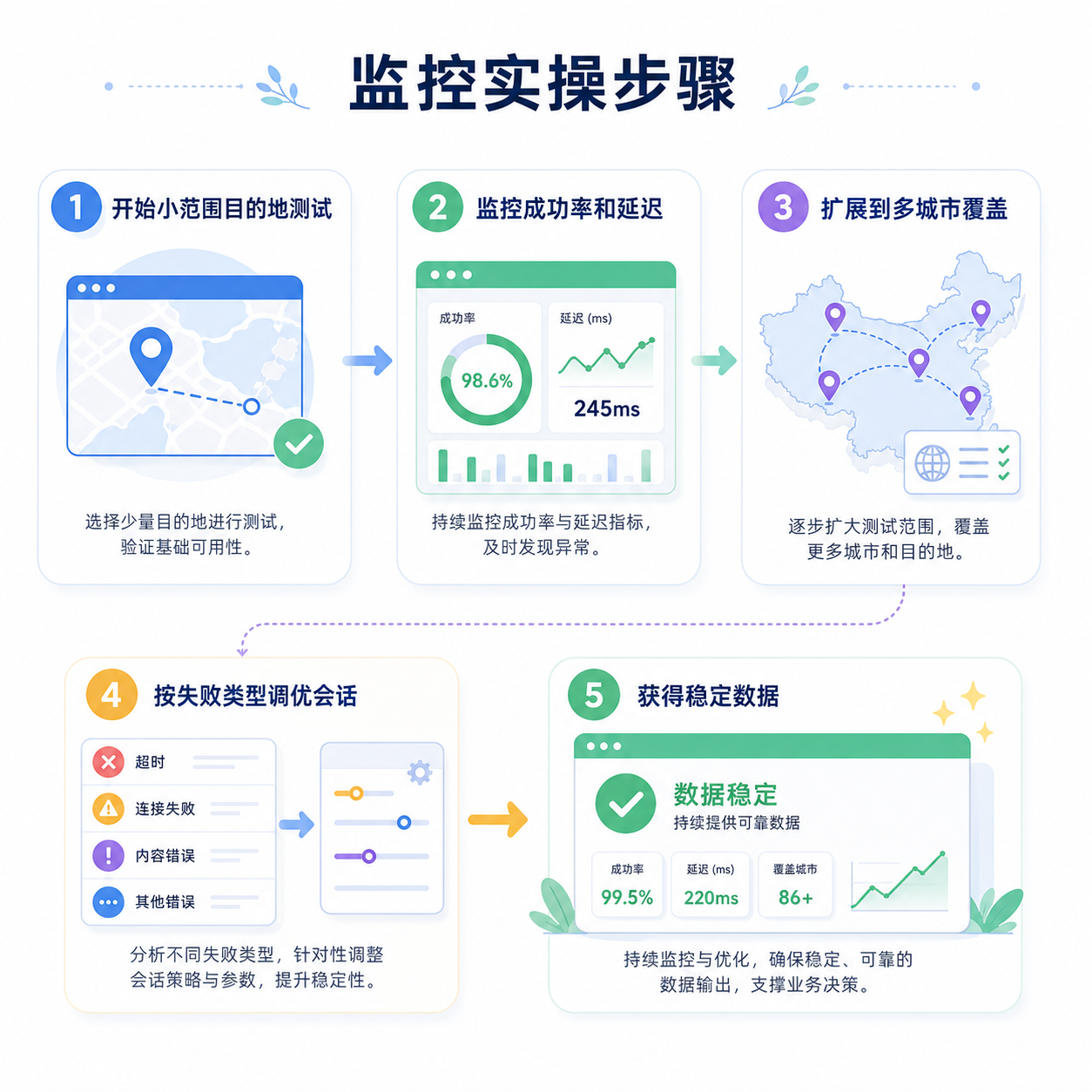
Start small-scale tests with one destination and a few days of data. Monitor success rates and latency closely, then expand to multiple cities and dates. In monitoring logs, identify failure types: timeout, CAPTCHA, or empty results? Adjust session duration or change regions accordingly. Legally, only touch public data, respect robots.txt and ToS, avoid logged-in content. Personal research has low risk; for commercial resale or large-scale operations, consult a lawyer.
Once deployed, price comparison tools capture competitor promotions in real time, hotels monitor channel conflicts, and research teams obtain demand signals. Dynamic residential IPs are not a silver bullet, but with correct session strategy and geographic precision, OTA data can shift from "occasionally viewable" to "consistently usable." In recent industry discussions, the focus is on combining rotation with short stickiness in production systems, and the relationship between success rate and real cost. Don't be fooled by cheap data center IPs; first get your residential pool and session settings right, then cleaning and analysis will have a solid foundation.
When you actually run it, you'll find that details determine whether you survive a week. For example, don't mix too many unrelated requests within the same session, keep behavior like a real user; pool quality scores must be real-time, automatically kick out bad nodes; for cross-timezone monitoring, synchronize local time. Once these are solid, the monitoring system is stable. Nexip's general capabilities—global residential coverage, flexible sessions, compliant foundation—perfectly match such scenarios, allowing teams to focus on business logic instead of constantly firefighting IP issues.
Keep the total word count in the practical range, no fluff. Next step: pick a target city, start testing, record the effective cost per thousand records, then iterate. Travel data windows are short; those who act fast reap the rewards.


Comments(0)